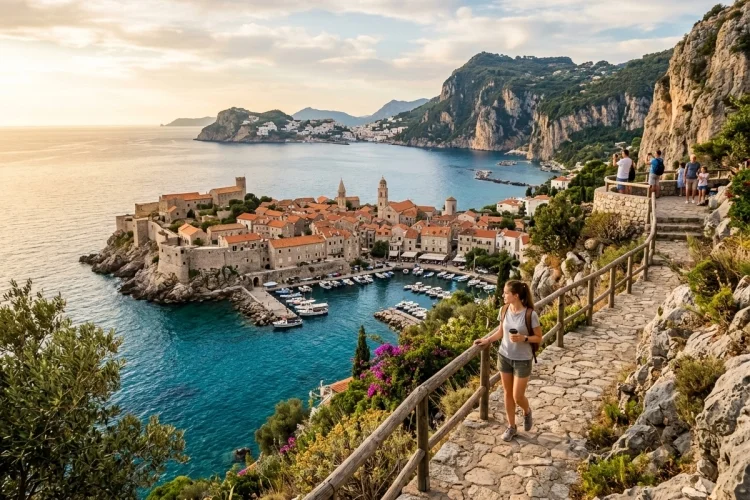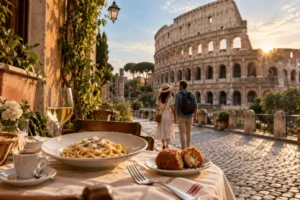

Planning one European holiday is exciting. Planning a trip that includes Portugal, Spain, Italy, Greece, Croatia, or southern France can suddenly feel like you are organising a small international expedition.
The temptation is obvious: if Lisbon, Barcelona, Rome, Athens, and Dubrovnik all look incredible, why not squeeze them into the same journey?
The problem is that moving between countries takes more time than the distance on a map suggests. Airports, train stations, hotel check-outs, luggage, and local transfers can quietly consume entire days.
A good multi-country Southern Europe holiday therefore depends less on visiting as many countries as possible and more on building a logical route. You need to balance transport, budget, weather, entry requirements, and enough downtime to actually enjoy each destination.
The good news is that Southern Europe has excellent high-speed rail corridors, extensive flight networks, ferries, and compact historic cities. With a little planning, you can experience several countries without spending half your holiday staring at departure boards.
1. Start with a Region, Not a Giant List of Countries
The first mistake people make is opening a map and choosing destinations purely because they recognise the names.
Instead, think in geographic clusters.
Portugal and Spain work naturally together. Spain, southern France, and northern Italy can form another route. Italy, Croatia, and Greece make sense if you want a Mediterranean and Adriatic-focused holiday.
Trying to combine Lisbon, Rome, Dubrovnik, Athens, Barcelona, and Santorini in ten days technically may be possible, but you would spend an exhausting amount of time in transit.
For a two-week holiday, three countries is usually a comfortable maximum. If you have only seven to ten days, two countries will normally create a much better experience.
Think about experiences too. Someone interested in food and architecture might prioritise Lisbon, Madrid, Florence, and Rome, while a beach-focused traveller could build a slower route around southern Italy, Croatia, and Greece.
2. Build Your Route in One Direction
Once you have chosen the countries, arrange them geographically.
Backtracking is one of the easiest ways to waste both money and time.
For example, imagine a trip that goes:
Lisbon → Madrid → Barcelona → Rome → Florence
That route keeps moving generally east rather than repeatedly crossing the same territory.
Spain is particularly convenient for this style of itinerary because its high-speed rail network connects major destinations including Madrid, Barcelona, Valencia, Seville, and Málaga. Madrid to Barcelona can take around 2.5 hours by high-speed train.
Italy works equally well once you arrive. High-speed services connect cities such as Rome, Florence, Venice, Milan, and Naples. Rome to Florence, for example, can take roughly 1 hour 25 minutes on Italo services.
This is where route design matters more than simply finding cheap tickets.
3. Mix Trains and Flights Instead of Choosing Only One
There is no rule saying a European holiday must be entirely by rail.
Trains are excellent when destinations are relatively close together. They usually take you from city centre to city centre, and you avoid much of the airport process.
Spain and Italy are especially useful for rail travel. Spain’s high-speed network connects dozens of destinations, while Italy has extensive high-speed, regional, and intercity services.
Cross-border rail can work too. Current international services connect Spain with France, including routes involving Barcelona, Lyon, and Marseille.
Flights become more practical for bigger jumps such as Barcelona to Rome or Italy to Greece. Ferry services can then be useful once islands enter your itineray.
A simple rule is to compare door-to-door travel time, not merely the advertised journey. A 90-minute flight can easily become five hours after travelling to the airport, arriving early, collecting baggage, and reaching your next hotel.
4. Give Every Destination Enough Time
Fast travel often looks brilliant on a spreadsheet.
Day one: Lisbon. Day two: Madrid. Day three: Barcelona. Day four: Rome.
In reality, it feels terrible.
For major cities such as Rome, Barcelona, Lisbon, or Madrid, aim for around three nights whenever your schedule allows. Smaller destinations may only need two.
A useful 16-day example could look like this:
Lisbon – 3 nights → Madrid – 3 nights → Barcelona – 3 nights → Rome – 4 nights → Florence – 3 nights
You could fly between the longer international gaps and use trains where they are efficient.
Also schedule some deliberately empty time. Not every morning needs an attraction reservation. Wandering through a neighbourhood, spending two hours over lunch, or sitting beside the Mediterranean is part of the holiday too.
The occasional slower day can save the entire trip from becoming exhausting.
5. Understand Schengen Rules Before Booking
Many popular Southern European destinations are within the Schengen Area, making travel between participating countries much simpler once you are inside.
However, visa and entry requirements depend on your nationality.
For eligible short stays, the commonly applied Schengen limit is up to 90 days within any 180-day period. Travellers should check their individual eligibility and visa requirements before purchasing non-refundable tickets.
Border procedures have also changed. As of September 2026, the EU’s Entry/Exit System (EES) is fully operational.
Since 10 April 2026, it has digitally recorded external Schengen entries and exits for eligible non-EU short-stay travellers, including biometric information.
ETIAS is seperate from EES. The EU currently says ETIAS is expected to begin during the final quarter of 2026 for relevant visa-exempt travellers, with the exact start date still to be formally announced.
Because these rules can change, check official EU information again shortly before departure.
6. Budget for Travel Days, Not Just Hotels and Food
Multi-country trips create expenses that are easy to overlook.
You might budget €100 for a flight but forget the airport train, checked baggage, seat selection, local transport, and food during the journey.
Accommodation prices also vary enormously between cities and seasons. Rome, Barcelona, Greek islands, and popular Croatian coastal towns can become considerably more expensive during summer.
Booking early can help, but flexibility matters too.
Instead of spending every night in the historic centre, consider accomodation near a metro or railway station. Being ten minutes farther from the main attractions can sometimes reduce prices while making departure days much easier.
Keep a separate transport budget for trains, flights, ferries, airport transfers, and local public transport. That gives you a far more realistic picture than calculating airfare and hotels alone.
7. Choose the Right Season for Southern Europe
July and August sound perfect because they offer long days and beach weather.
They also bring crowds, high accommodation prices, busy attractions, and potentially intense heat.
For city-heavy holidays, late spring and early autumn can be more comfortable.
May, June, September, and parts of October often provide a useful balance between pleasant weather and manageable sightseeing conditions, although conditions vary considerably between countries and regions.
Your route should influence the timing.
A Greece-and-Croatia island trip has different seasonal priorities from a Madrid-Florence-Rome cultural journey.
Greece alone has thousands of islands and islets, with 227 inhabited islands spread across several groups, so transport and seasonal services deserve attention when island hopping.
Always check ferry schedules and attraction opening times rather than assuming summer-style frequencies operate year-round.
8. Book the Difficult Parts First
You do not necessarily need every restaurant and museum booked six months ahead.
You should, however, secure anything that could determine the rest of the trip.
Start with your international arrival and departure flights. An open-jaw ticket – flying into one city and home from another – can be extremely useful for multi-country travel because it eliminates unnecessary backtracking.
Next, book expensive or limited transport legs, especially international flights, popular high-speed trains, overnight ferries, and island connections.
Then arrange hotels and major attractions.
Keep smaller activities flexible. Having every hour reserved can create problems if a train is delayed, the weather changes, or you simply discover somewhere you want to stay longer.
The best plan gives you structure without making the whole holiday feel like a timetable.
A successful multi-country Southern Europe holiday is not about collecting the largest possible number of passport destinations.
It is about creating a route where the journey between places feels logical and the destinations themselves still have enough time to be enjoyed.
Start with two or three neighbouring countries, travel largely in one direction, and combine high-speed trains with flights or ferries where they genuinely save time.
Leave at least a few nights for major cities, build some breathing room into the schedule, and check current Schengen and border requirements before travelling.
Southern Europe offers enough history, food, coastline, architecture, and local culture for dozens of trips. Plan this one carefully, travel a little slower, and you will probably return wanting to organise the next one.