Choosing your first Greek island sounds easy until you realise Greece has far more options than Santorini and Mykonos.
Some islands are famous for whitewashed villages and sunsets. Others have enormous sandy beaches, medieval towns, mountain villages, archaeological sites, hiking trails, vineyards, or nightlife that keeps going until breakfast.
Pick the wrong island for your travel style and you could spend your holiday wondering where all those dreamy Greek postcards disappeared to.
The best Greek islands for first-time visitors are generally places that offer a good mixture of scenery, beaches, food, culture, and reasonably straightforward transport.
You want enough variety to understand why Greek island holidays are so addictive without turning your first trip into a complicated ferry expedition.
Santorini remains difficult to ignore, but Crete, Naxos, Paros, Rhodes, and Corfu can be equally rewarding depending on what you actually want from the holiday.
Here is how they compare.
1. Santorini: Best for the Classic Greek Island Experience
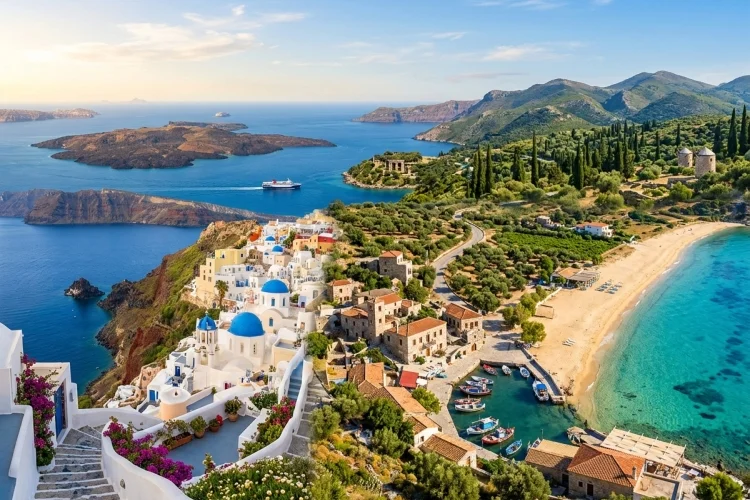
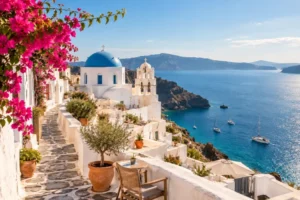
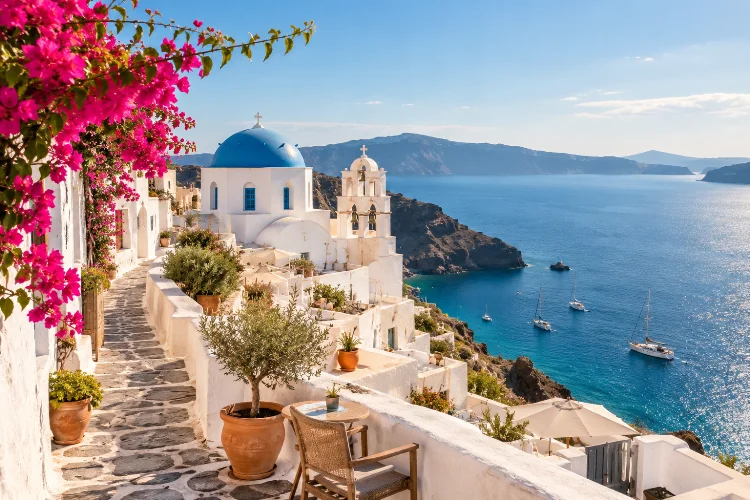
If your mental picture of Greece involves white houses clinging to cliffs above a deep blue sea, Santorini is probably responsible.
Its enormous volcanic caldera creates one of Europe’s most recognisable island landscapes.
Oia and Fira deliver the famous Cycladic architecture, while volcanic activity has created unusual beaches with black and red sand rather than the endless golden shoreline some first-time travellers expect.
Santorini works particularly well for couples, photographers, honeymooners, and anyone prioritising dramatic scenery. There are also archaeological sites, wineries, boat excursions around the caldera, and villages away from the busiest viewpoints.
Accessibility is another advantage. Visit Greece lists flights from Athens at around 50 minutes, so you do not necessarily need to begin your first island holiday with a long ferry crossing.
The downside is popularity. Summer crowds can be intense and accomodation with a caldera view can be expensive. Consider visiting in May, June, September, or early October if you want the scenery without peak-season pressure.
2. Crete: Best for Travellers Who Want Everything in One Trip
If you are worried that spending a week on one island might become repetitive, Crete is a very safe choice.
It is Greece’s largest island and has more than 1,000 kilometres of coastline. Its scale means one holiday can include Venetian old towns, mountains, archaeological sites, beaches, rural villages, wineries, gorges, and some of Greece’s most distinctive regional cooking.
Western Crete is particularly attractive for a first experiance. Chania has an atmospheric Venetian harbour and historic centre, while the surrounding region provides access to places such as Balos, Elafonisi, and Samaria Gorge.
Rethymno combines another attractive old town with beaches and easy access to the countryside.
History enthusiasts should also consider Heraklion. Knossos lies nearby, and Crete’s Minoan Palatial Centres were added to UNESCO’s World Heritage List in 2025.
Do not underestimate Crete’s size, though. Trying to see the entire island in five days means spending too much time in a car. Pick one or two regions and explore them properly.
3. Naxos: Best for Beaches, Food and a More Relaxed Cyclades Trip
Naxos offers much of what first-time visitors want from the Cyclades but usually feels less dominated by the international spotlight than Santorini.
It is the largest and most fertile island in the Cyclades, combining long beaches with agricultural valleys, mountains, medieval influences, traditional villages, and a strong local food culture.
The beaches are a major reason to come. Agios Georgios has shallow water close to Naxos Town, while Agios Prokopios, Agia Anna, and Plaka provide long stretches of attractive coastline. Farther away, Alyko and Pyrgaki offer quieter surroundings with dunes and cedar trees.
Head inland and Naxos becomes completely different. Villages including Halki, Filoti, and Apeiranthos reveal a mountainous side of the island that visitors staying exclusively beside the beach can easily miss.
Naxos also has an airport, with flights from Athens taking roughly 45 minutes according to Visit Greece.
For a first Greek holiday that mixes swimming, traditional villages, local food, and gentle exploration, Naxos is surprizingly difficult to beat.
4. Paros: Best for a Balance of Beaches and Social Life
Paros sits near Naxos geographically, but its personality is slightly different.
The island combines sandy beaches and traditional Cycladic architecture with a livelier social scene. Naoussa is the best-known example, where narrow whitewashed streets lead toward a harbour surrounded by restaurants, bars, and evening activity.
Paros is still more than nightlife. Lefkes offers a quieter traditional village atmosphere, while beaches and water sports make it an easy choice for travellers who want active days followed by good dinners and drinks.
Its central position within the Cyclades can also make it useful for island hopping. A first-time visitor could combine Paros with Naxos rather than attempting four or five islands in a single week.
Getting there is straightforward by Greek island standards. Direct flights from Athens take about 45 minutes, while ferries connect Paros with other Cycladic destinations.
If your travel group contains one person who wants beaches, another who wants pretty villages, and somebody who insists on having somewhere lively to go at night, Paros makes a practical compromise.
5. Rhodes: Best for History Mixed with Beaches
Not every Greek island looks like the white-and-blue Cyclades.
Rhodes, in the Dodecanese, offers an entirely different introduction to the country. Its landscape combines beaches and pine-covered mountains with archaeological sites, resorts, villages, and one of the Mediterranean’s most impressive medieval urban centres.
The Medieval City of Rhodes is UNESCO-listed and preserves the influence of the Knights of St John. Walking through its gates can feel more like arriving in a medieval European fortress than the Greek island holiday you imagined.
Then there is Lindos, where white houses sit beneath an ancient acropolis overlooking the coastline.
Beach choices are extensive too. Rhodes has around 253 kilometres of coastline, with options ranging from family-friendly Agathi and Glystra to famous locations such as Tsambika and Anthony Quinn Bay.
Flights from Athens take roughly an hour.
Rhodes is therefore a strong choice if spending seven straight days lying beside the sea sounds a little boring. You can easily alternate beach days with castles, ancient ruins, villages, and road trips.
6. Corfu: Best for Green Scenery and European Character
Travel west to the Ionian Sea and Greek island scenery changes again.
Corfu is much greener than the dry, rocky image often associated with the Cyclades. Olive groves, wooded hills, beaches, and coves surround an island shaped by centuries of Venetian, French, British, and Greek influences.
Corfu Town is one of the biggest attractions. Its UNESCO-listed Old Town contains fortifications, narrow stone-paved streets, churches, squares, and architecture reflecting the island’s long European connections.
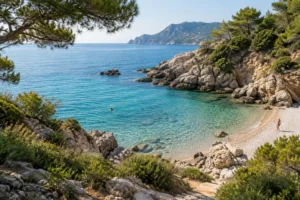
Outside town, the coastline varies enormously. Paleokastritsa combines turquoise water with rocky formations and sea caves, while Agios Gordios and Kontogialos provide sandy alternatives. Other stretches feature dunes, pebble shores, cliffs, and quieter coves.
Corfu is also accessible by air, with the flight from Athens taking around 1 hour 15 minutes.
For travellers who want beaches but are less interested in the classic barren Cycladic landscape, Corfu provides a very seperate version of island Greece.
How to Choose the Right Greek Island for Your First Trip
Start with what you want to do rather than asking which island is universally “best.”
Santorini makes sense if the caldera views and famous Cycladic scenery are the main dream. Crete is better when you want enough variety for a longer holiday, while Naxos suits travellers interested in sandy beaches, food, and traditional villages.
Paros provides a stronger social scene without becoming entirely about nightlife. Rhodes combines beach time with substantial historical sightseeing, while Corfu works beautifully for travellers attracted to greenery, architecture, and Ionian scenery.
Also consider the length of your holiday. With a week, staying primarily on one island usually creates a more relaxed trip. With 10 to 14 days, pairing two nearby islands – such as Naxos and Paros – becomes far more realistic.
Do not spend half your holiday repeatedly packing bags simply because island hopping sounds romantic.
When Is the Best Time to Visit the Greek Islands?
July and August offer hot weather and plenty of activity, but they are also among the busiest periods for many famous destinations.
Late spring and early autumn can offer a better balance for sightseeing and beach holidays. May, June, September, and early October are worth considering, although weather and seasonal ferry schedules vary between regions and years.
If swimming is important, research average sea and air conditions for your chosen island rather than assuming every part of Greece has identical weather.
Popular hotels, ferries, rental cars, and attractions can fill well ahead during summer, so reserve the important parts of your trip early while leaving some room for spontaneous beach days and long taverna lunches.
There is no single Greek island that works perfectly for every first-time traveller, and that is exactly why Greece is so easy to return to.
Choose Santorini for unforgettable caldera scenery, Crete for maximum variety, Naxos for beaches and traditional island life, or Paros for a balance between relaxation and social energy.
Rhodes adds remarkable history, while Corfu replaces the classic dry Cycladic scenery with lush Ionian landscapes and elegant architecture.
For your first trip, resist the urge to squeeze too many islands into one itinerary. Pick the place that matches how you actually enjoy travelling, stay long enough to explore beyond the port or resort, and leave a few days intentionally unplanned.
Chances are, your first Greek island will simply help you decide which one to visit next.