Southern Europe has a habit of making travellers want to stay longer than planned. One day, you are wandering through a medieval neighbourhood with a coffee in hand.
The next, you are swimming below dramatic cliffs, exploring Roman ruins, or watching the sun disappear behind a whitewashed island village.
Choosing the Best Places to Visit in Southern Europe can be tricky because the region offers so much variety. Portugal and Spain deliver colourful cities and late-night dining, while Italy combines ancient history, coastal scenery, and legendary food.
Greece brings beautiful islands and archaeological treasures, and the Adriatic coast offers fortified towns, mountain-backed bays, and clear blue water.
This guide covers some of Southern Europe’s most rewarding destinations, including famous highlights and a few places that are sometimes overlooked.
Whether you are planning a romantic escape, a cultural city break, a beach holiday, or a multi-country adventure, these destinations can help you build a trip that feels exciting without becoming exhausting.
1. Lisbon, Portugal: Best for Hillside Views and Easygoing City Life
Lisbon is a great introduction to Southern Europe because it mixes historic architecture with a relaxed, modern atmosphere. The Portuguese capital stretches across hills beside the Tagus River, creating plenty of viewpoints, winding streets, and colourful neighbourhoods.
Start in Alfama, where narrow lanes lead towards São Jorge Castle. Baixa is better for grand squares and shopping streets, while Belém is home to several of the city’s most recognisable monuments. Traditional fado performances, tiled buildings, bakeries, and historic trams add plenty of local character.
Add a Day Trip to Sintra
Lisbon also works well as a base for exploring the surrounding region. Sintra is the obvious day-trip choice, with palaces, gardens, and forested hills. Coastal destinations and natural parks are also within reach, meaning you can combine city sightseeing with outdoor experiences without changing hotels.
Allow at least three full days for Lisbon. The city’s steep streets can make sightseeing slower than expected, so comfortable shoes are more useful than an ambitious schedule.
2. Seville, Spain: Best for Culture, Tapas, and Warm Evenings
Seville captures much of what people imagine when they picture southern Spain. The Andalusian capital is known for flamenco culture, lively neighbourhoods, orange trees, historic buildings, and evenings that seem to continue well past midnight.
Major attractions include the Royal Alcázar, Seville Cathedral, La Giralda, Plaza de España, and María Luisa Park. However, the city is just as enjoyable when you are wandering through Santa Cruz or sharing small plates in a neighbourhood tapas bar.
Seville can become extremely hot during summer. For long walking days, spring and autumn are generally more comfortable choices.
Easter celebrations and the Feria de Abril are especially famous, although these periods can also bring larger crowds and higher accommodation demand.
Spend two or three nights here, and avoid scheduling every meal in advance. Some of the best experiences come from finding a busy local bar and ordering whatever looks good.
3. Rome and the Amalfi Coast, Italy: Best for History and Coastal Drama
Italy has enough impressive destinations for several separate holidays, but Rome and the Amalfi Coast create a particularly memorable combination.
Explore Rome Beyond the Main Monuments
Rome is packed with ancient landmarks, churches, piazzas, fountains, museums, and neighbourhood restaurants. First-time visitors will naturally want to see the Colosseum, Roman Forum, Pantheon, Trevi Fountain, and Spanish Steps.
The Colosseum, Roman Forum, and Palatine Hill form part of the same major archaeological area, so it is worth giving them most of a day rather than rushing through.
Leave time for quieter experiences as well. Walk around Trastevere in the evening, visit a local food market, or sit in a small square with an espresso. Rome is more enjoyable when you balance major attractions with unplanned neighbourhood wandering.
Slow Down on the Amalfi Coast
South of Naples, the Amalfi Coast is known for steep cliffs, small bays, terraced landscapes, colourful towns, and roads overlooking the sea. Positano and Amalfi attract the most attention, while towns such as Minori, Maiori, and Vietri sul Mare can offer a slightly different atmosphere.
Do not try to visit every coastal town in one day. Buses, ferries, traffic, and steep walking routes can make short distances take longer than expected. Staying for three or four nights creates a much calmer experience.
4. Santorini, Greece: Best for Volcanic Landscapes and Island Romance
Santorini is one of Southern Europe’s most recognisable islands. White buildings, blue-domed churches, cave houses, and dramatic views across the volcanic caldera have made it especially popular with honeymooners and photographers.
Oia is famous for sunsets, while Fira offers more restaurants, shops, and transport connections. The island also has volcanic beaches, wineries, traditional villages, and important archaeological sites.
Akrotiri was a significant Bronze Age settlement that was preserved beneath volcanic material, making it one of Santorini’s most interesting cultural attractions.
Santorini can become crowded, particularly around Oia at sunset. Stay overnight rather than visiting briefly on a cruise excursion, explore early in the morning, and consider villages such as Pyrgos or Emporio for a quieter experience.
Travellers mainly interested in beaches may prefer another Greek island. Santorini is most rewarding for scenery, food, wine, history, and romantic views rather than long stretches of soft sand.
5. Dubrovnik and the Bay of Kotor: Best for an Adriatic Road Trip
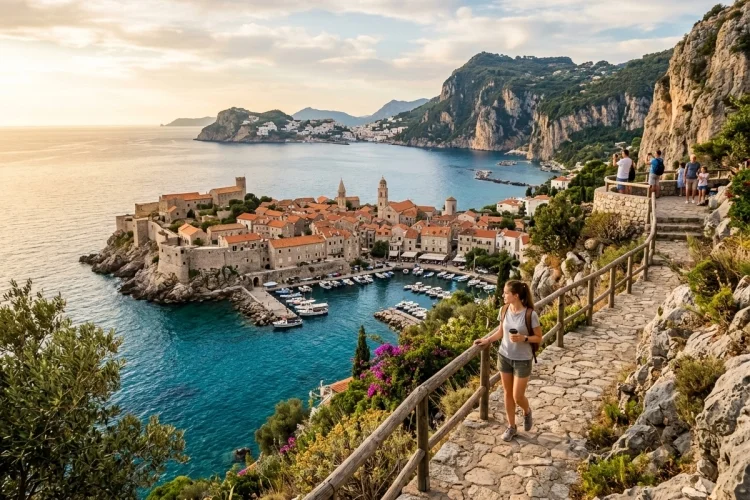
Dubrovnik is one of the most attractive fortified cities on the Adriatic coast. Its stone streets, historic walls, red roofs, and sea views make the Croatian city feel almost cinematic.
Walk around the Old Town early in the morning before the busiest day visitors arrive. The city walls, harbour area, Lovrijenac Fortress, and cable-car viewpoints can easily fill two days.
Drivers should check current access and parking rules because Dubrovnik operates traffic controls around its historic centre.
From Dubrovnik, continue south into Montenegro and spend time around the Bay of Kotor. Kotor combines a medieval walled centre with mountains that rise sharply behind the bay.
Nearby Perast offers stone architecture and easy access to boat trips, while Tivat provides marinas, restaurants, and modern accommodation.
Allow at least four or five days for Dubrovnik and Kotor together. Crossing an international border can add travel time, especially during the busy season.
6. Valletta, Malta: Best for a Compact Mediterranean Break
Valletta proves that a capital city does not need to be large to feel packed with history. Malta’s honey-coloured capital is filled with fortifications, churches, balconies, museums, and streets leading towards the Mediterranean.
The city is one of Malta’s three UNESCO World Heritage sites. From Valletta, travellers can easily explore places such as the Three Cities, Mdina, Gozo, and coastal swimming spots. Official maps and destination guides make it relatively simple to plan trips around the islands.
Malta is particularly useful for travellers who want history, food, swimming, and nightlife without arranging a complicated multi-city route. Stay four or five days if you plan to explore beyond Valletta.
How to Choose the Right Southern European Destination
The best destination depends on what you actually enjoy doing. Choose Rome, Seville, or Lisbon for architecture, culture, and city energy. Santorini and the Amalfi Coast are stronger choices for scenery and romance, while Malta works well for a compact holiday mixing history with the sea.
Dubrovnik and Kotor are ideal for an Adriatic journey, especially when combined by car or bus. However, avoid squeezing Portugal, Spain, Italy, Greece, and the Balkans into a single short holiday. Travel days, airport transfers, and hotel changes can quickly reduce the time available for exploring.
For a one-week trip, focus on one country or two nearby regions. With two weeks, you could combine Lisbon and Seville, Rome and the Amalfi Coast, or Dubrovnik and Montenegro. Travelling more slowly usually leads to better meals, fewer stressful transfers, and more memorable local experiences.
The Best Places to Visit in Southern Europe offer far more than sunny weather and attractive coastlines. Lisbon and Seville provide colourful city life, Rome brings extraordinary history, and the Amalfi Coast delivers unforgettable Mediterranean scenery.
Santorini offers volcanic beauty, while Dubrovnik, Kotor, and Valletta combine historic streets with easy access to the sea. The smartest approach is to choose destinations that match your interests and available time.
Instead of rushing through several countries, build a focused itinerary with longer stays and room for spontaneous discoveries.
Decide whether your priority is food, beaches, culture, history, or romance, then start comparing routes and travel seasons. Your ideal Southern European adventure may be closer to reality than you think.