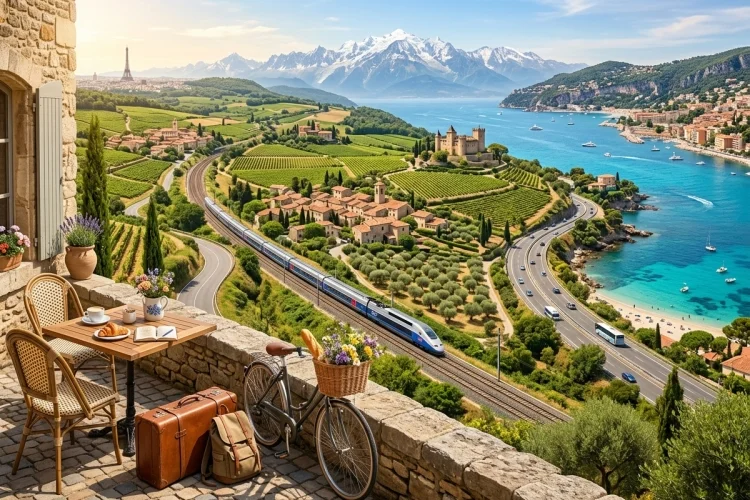
France can feel like several countries packed into one. Paris delivers world-famous museums and café culture, Provence brings sunlit villages and countryside, while Normandy, the Alps, Bordeaux, and the French Riviera each offer a completely different atmosphere.
That variety is exciting, but it can also make planning a first trip surprisingly difficult. This First-Time Guide to Travelling around France makes the process simpler.
Instead of squeezing every landmark into one exhausting holiday, you will learn how to choose a realistic route, use the French rail system, manage your spending, understand local customs, and leave room for spontaneous discoveries.
Whether you are dreaming of croissants in Paris, vineyard views near Bordeaux, medieval streets in Lyon, or a seaside afternoon in Nice, the key is not seeing everything. It is travelling at a pace that lets you enjoy where you are.
1. Choose the Right Time and Route
France is a year-round destination, so the best month depends on your plans. Spring is great for city walks and gardens, summer suits beaches and festivals, autumn works well for food and wine regions, and winter appeals to museum lovers and skiers.
France’s tourism board also highlights spring for outdoor cafés, parks, and regional exploration.
For a first visit, late spring or early autumn often offers a comfortable balance. More importantly, choose your route around your interests rather than trying to follow every popular recommendation.
Do Not Try to Cover the Whole Country
A common beginner mistake is booking a different city every night. Constant transfers quickly turn a holiday into a luggage-handling exercise.
Choose two or three regions for a seven-to-ten-day trip. A focused Paris-Loire Valley-Lyon route will usually feel more rewarding than racing through five distant destinations.
2. Check Entry Rules Before Booking
Visa and passport requirements depend on your nationality, trip length, and circumstances. Some non-European travellers need a short-stay Schengen visa, while others may enter visa-free for a limited period.
France’s official France-Visas portal provides a visa assistant covering requirements, documents, and application steps.
Check the rules before paying for non-refundable bookings. You may need accommodation details, proof of funds, travel insurance, or an onward ticket.
Keep digital and printed copies of your passport, insurance, bookings, emergency contacts, and transport tickets. Store them somewhere accessible even without mobile data.
3. Use Trains for Long-Distance Travel
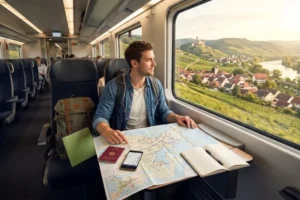
France is one of Europe’s easiest countries to explore by rail. High-speed TGV services connect major cities, while TER regional trains serve smaller towns and local routes.
TGV trains can reach 320 kilometres per hour and serve more than 200 cities in France and Europe. SNCF Connect lets travellers search and manage TGV INOUI, lower-cost OUIGO, and regional journeys.
Book popular routes early when possible, especially around weekends and holidays. Always check exchange and cancellation conditions before choosing the cheapest fare.
Know When a Car Makes Sense
You probably do not need a car in Paris, Lyon, Bordeaux, Lille, or Nice. Public transport and walkable neighbourhoods often make driving more stressful than useful.
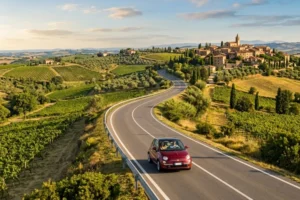
A rental car becomes valuable in rural Provence, Dordogne, Alsace villages, or parts of Normandy. Check parking, toll roads, fuel costs, transmission type, and licence requirements before booking.
4. Build a Realistic Ten-Day Itinerary
Begin with three nights in Paris. That gives you time for major attractions, a neighbourhood such as Montmartre or Le Marais, a Seine-side walk, and one unplanned afternoon.
Next, spend two nights in the Loire Valley, Lyon, or Normandy. The Loire suits castle lovers, Lyon is excellent for food and historic streets, and Normandy combines coastal scenery with important historical sites. France’s official destination directory can help you compare regions.
Finish with three or four nights in southern France. Avignon or Aix-en-Provence works well for Provence, while Nice provides easy access to the French Riviera.
Leave your final night close to the departure airport or rail connection. Adjust the route to your interests instead of treating it as a fixed checklist.
5. Understand Local Transport
Paris has an extensive network of metro, RER trains, buses, and trams. The metro currently has 16 lines and more than 300 stations, making it practical for most sightseeing journeys.
The Metro mainly handles central-city travel, while the RER reaches farther into the suburbs and connects with airports and attractions outside central Paris. Other large French cities use similar combinations of metro, tram, bus, and bike-sharing services.
Buy tickets only from official machines, counters, or authorised apps. Keep your ticket until you leave the system, check covered zones, and watch your belongings in crowded stations. Official visitor guidance also warns against unofficial ticket sellers.
6. Control Your Budget and Enjoy French Food
France can suit several budgets, but location and timing matter. Central Paris hotels, last-minute high-speed trains, and restaurants beside famous landmarks usually cost more than regional stays, early bookings, and neighbourhood cafés.
Divide your budget into accommodation, intercity transport, local travel, food, and attractions. Book the expensive essentials first, then reserve a flexible daily amount for markets, museum tickets, and unexpected discoveries.
Bakeries, food markets, crêperies, casual lunch menus, and supermarket picnics can reduce costs while still feeling distinctly French. Saving on lunch can make room for a special dinner later.
7. Learn Basic Etiquette and Stay Travel-Smart
You do not need fluent French, but a few phrases make interactions smoother. Start with “Bonjour,” “Bonsoir,” “S’il vous plaît,” “Merci,” and “Parlez-vous anglais?” Greeting staff before asking a question is especially important in shops, cafés, and hotels.
Restaurant service may feel slower because meals are often treated as an experience. Ask for the bill with “L’addition, s’il vous plaît,” as it may not arrive automatically.
Crowded stations, metro carriages, and major attractions can attract pickpockets. Use a zipped bag, keep your phone secure, and avoid displaying large amounts of cash.
Download offline maps, hotel addresses, train tickets, and a translation app before each travel day. Leave gaps in your schedule because delays, weather, and travel fatigue are easier to manage when every hour is not booked.
A successful first trip around France is less about collecting landmarks and more about creating a route you can genuinely enjoy.
Choose a few compatible regions, confirm your entry requirements, book major train journeys early, and leave enough time for local streets, cafés, markets, and everyday French life.
Use this First-Time Guide to Travelling around France as a starting point rather than a rigid checklist. Pick destinations that match your interests, build in breathing room, and check official information before departure.
Start sketching your route today, compare your transport options, and book the essentials once the pace feels comfortable rather than rushed.