Choosing a Greek island should be exciting. Instead, it often begins with fifty browser tabs, hundreds of beautiful beach photos, and the growing suspicion that every island somehow looks perfect.
The truth is that Greek islands are not interchangeable. Santorini is known for volcanic landscapes and caldera views, while Naxos offers long beaches, traditional villages, and a more relaxed atmosphere.
Mykonos suits travellers who want fashionable restaurants and energetic nightlife, whereas Crete is large enough to support a complete road trip.
Learning how to choose the right Greek island for your holiday starts with understanding what you want from the trip. Are you planning a romantic escape, a family beach break, a cultural adventure, or a week of late-night parties?
This guide compares seven popular options by atmosphere, activities, accessibility, and travel style. Once you stop searching for the “best” island and start looking for the best match, the decision becomes much easier.
Start with Your Ideal Holiday Style
Before comparing hotels or ferry fares, decide how you want an average day to feel. Picture the trip itself rather than the photographs you hope to take.
A couple celebrating an anniversary may prioritise sunset views, stylish accommodation, and intimate restaurants. A family may care more about shallow beaches, short transfers, and easy access to supermarkets. Active travellers could prefer hiking, boat trips, archaeological sites, or a self-drive itinerary.
Trip length matters too. A compact island works well for three or four nights, while a larger destination deserves at least a week.
Greece includes several island groups, including the Cyclades, Ionian Islands, Dodecanese, Sporades, and North Aegean islands, each with its own landscapes and architectural character.
1. Choose Santorini for Romance and Dramatic Views
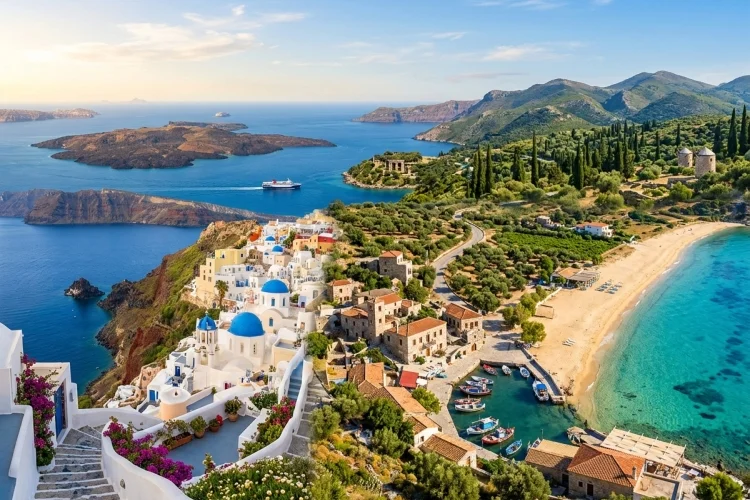
Santorini is the classic choice for honeymoons, anniversaries, and scenery-focused escapes. Its whitewashed settlements sit above a volcanic caldera, creating the cliffside views that appear in countless Greek holiday photographs.
Oia is famous for sunset viewing, while Fira offers more shops, restaurants, transport connections, and nightlife. The island also has wineries, walking routes, volcanic excursions, and the archaeological site of Akrotiri, a sophisticated Bronze Age settlement preserved beneath volcanic material.
However, Santorini is not the obvious choice for travellers whose main priority is a traditional sandy beach. Its volcanic coastline includes distinctive black- and red-toned beaches rather than the wide golden shores found on islands such as Naxos.
Choose Santorini when atmosphere, views, wine, and romantic accommodation matter more than quiet beaches or low-key village life.
2. Choose Naxos for Families, Food, and Relaxed Beach Days
Naxos is a strong all-rounder, particularly for families and first-time island visitors. It is the largest island in the Cyclades and combines long beaches with fertile countryside, mountain villages, ancient monuments, and excellent local food.
Beaches such as Agios Georgios provide sand and shallow water close to the main town. Agios Prokopios, Agia Anna, and Plaka offer longer stretches of coastline with accommodation, tavernas, and organised facilities nearby.
Naxos is not only about swimming. You can explore Chora’s old lanes, see the Portara at sunset, drive into villages such as Halki and Apeiranthos, or try local cheese, meat dishes, olive oil, wine, and citron liqueur.
It suits travellers who want variety without the intense social scene associated with Mykonos or the cliffside prices and crowds of Santorini.
3. Choose Crete for a Longer, More Varied Adventure
Crete is the right choice when you want your island holiday to feel like a complete journey. It is Greece’s largest island and the fifth largest in the Mediterranean, so attempting to explore all of it in a few days is unrealistic.
Instead, focus on one or two regions. Western Crete offers Chania, dramatic gorges, traditional villages, and famous beaches.
Central Crete provides access to Heraklion, archaeological museums, wineries, and the Minoan palace complex at Knossos, while the eastern side has resorts, quieter coastal communities, and scenic driving routes.
Crete also works well for travellers who want more than a fly-and-flop beach holiday. You can combine hiking, history, food, road trips, swimming, and mountain scenery without needing to take another ferry.
Allow at least seven days, preferably longer when you plan to rent a car. Crete rewards slow exploration far more than an ambitious island-wide checklist.
4. Decide Between Mykonos and Milos
Both belong to the Cyclades, but they deliver very different holidays.
Mykonos: Best for Nightlife and Stylish Beach Clubs
Mykonos is the obvious match for travellers who enjoy fashionable hotels, fine dining, busy beach clubs, boutique shopping, and parties that continue late into the night. Its best-known nightlife includes international DJs and venues around Paradise and Super Paradise beaches.
Mykonos Town adds whitewashed lanes, waterfront bars, traditional architecture, and the famous windmills. The island also has a quieter cultural side, including boat trips to the archaeological island of Delos.
July and August bring the liveliest atmosphere and the largest crowds. Late spring or September can offer a more relaxed version of the island while retaining warm weather and active restaurants.
Milos: Best for Beaches and Natural Scenery
Milos is a better option when you care more about unusual coastlines than nightlife. Its volcanic past created colourful rock formations, sea caves, bright white cliffs, and beaches that look completely different from one another.
Sarakiniko is the most recognisable landscape, while boat trips reveal coves and coastal formations that are difficult or impossible to reach overland.
Choose Milos for swimming, photography, small fishing villages, and relaxed evenings. It works especially well for couples who want romance without Santorini’s highly developed caldera scene.
5. Decide Between Corfu and Rhodes
Corfu and Rhodes both have international airports, historic towns, beaches, and established holiday infrastructure. Their landscapes and cultural personalities, however, are noticeably different.
Corfu: Best for Greenery and European-Inspired Architecture
Corfu lies in the Ionian Sea and feels greener than the typically dry Cycladic islands. Olive-covered hills, sandy beaches, traditional villages, and a coastline suited to boat trips make it appealing to families, couples, and nature lovers.
Corfu Old Town displays Venetian, French, and British influences and is recognised as a UNESCO World Heritage Site. This gives the island a cosmopolitan atmosphere that feels different from the white-and-blue image commonly associated with Greece.
Choose Corfu for culture, scenic drives, green landscapes, and a combination of beach resorts and historic sightseeing.
Rhodes: Best for History and Easy Resort Holidays
Rhodes combines golden beaches with one of Greece’s strongest collections of medieval and ancient attractions. Its UNESCO-listed Old Town contains stone walls, gateways, narrow streets, and major landmarks connected to the Knights of St John.
Lindos adds whitewashed lanes, an acropolis, and coastal views, while the island’s developed resorts make organised family holidays relatively straightforward. Rhodes is especially useful when one traveller wants sightseeing and another mainly wants beaches.
It is large enough to justify a rental car, although visitors staying near Rhodes Town can explore plenty without driving every day.
6. Check Transport, Season, and Trip Length
Direct flights can make Crete, Corfu, Rhodes, Mykonos, and Santorini convenient for a single-island holiday. Smaller islands may require a connection through Athens or a ferry from another island.
For island hopping, choose nearby destinations within the same group. Naxos and Paros combine naturally, as do Mykonos and Tinos or Milos and Kimolos. Avoid selecting islands simply because they all look close on a map; ferry routes and schedules do not always connect them efficiently.
June and September often provide warm conditions with a slightly calmer atmosphere than July and August. Peak summer offers the widest choice of seasonal services but also brings higher demand, so book accommodation and key transport earlier.
As a simple rule, choose one island for a holiday of fewer than seven days. With ten days or more, combining two well-connected islands can work without turning the trip into a series of transfers.
Knowing how to choose the right Greek island for your holiday comes down to matching the destination with your preferred pace. Santorini offers romance and volcanic views, Naxos delivers family-friendly beaches and local food, while Crete suits longer road trips.
Mykonos is built for stylish nightlife, Milos specialises in dramatic coastal scenery, Corfu feels green and culturally layered, and Rhodes combines beaches with remarkable history.
Do not choose an island only because it is famous. Consider your trip length, budget, preferred activities, and tolerance for crowds before booking.
Write down the three experiences that matter most to you, compare them with the islands above, and start planning the Greek escape that fits your real travel style.