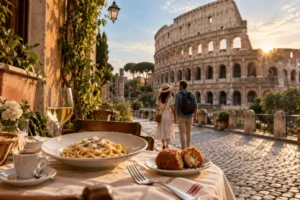
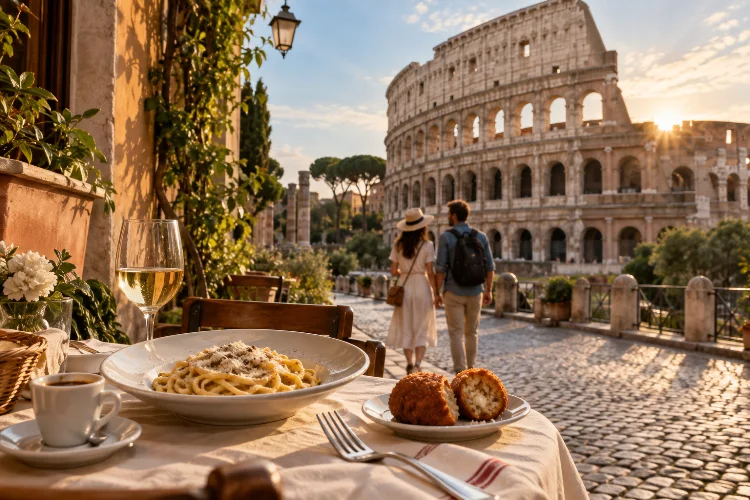
Rome has a slightly unfair advantage over most European cities. You can walk out for coffee, turn a corner, and suddenly find yourself staring at a nearly 2,000-year-old building as if somebody casually left it between two modern streets.
That is also what makes a first visit challenging. There is simply too much to see.
Ancient ruins compete with Renaissance churches, neighbourhood trattorias compete with famous museums, and every itinerary seems to insist that another “unmissable” attraction must somehow fit into your afternoon.
The best approach to Rome for first-time visitors is not trying to see everything.
Instead, focus on the essential landmarks, leave time for wandering, learn a little about Roman food, and avoid the tourist mistakes that can turn an exciting holiday into hours of queues and unnecessary spending.
From the Colosseum and Vatican Museums to carbonara, supplì and evening walks through Trastevere, here is a practical guide to experiencing Rome without completely exhausting yourself.
1. Start with Ancient Rome: Colosseum, Forum and Palatine Hill
For most first-time travellers, the Colosseum is the obvious place to begin.
It is more impressive when you treat the surrounding archaeological area as one experience rather than visiting the amphitheatre and immediately leaving.
The Roman Forum and Palatine Hill sit nearby and help put the Colosseum into context, revealing temples, political buildings, residences and public spaces that once formed the heart of ancient Rome.
The archaeological park currently requires a timed reservation for entry to the Colosseum, with official ticket sales normally opening 30 days before the chosen visit date.
In the main 2026 summer season, the Colosseum opens from 8:30 a.m., although closing times change through the year.
Give this area at least half a day. Comfortable shoes matter because ancient Rome involves far more uneven stones, slopes and dusty paths than Instagram photos suggest.
Do Not Try to Rush the Forum
The Forum can initially look like a confusing collection of broken columns.
A guide, audio guide or a little background reading makes a huge difference. Once you understand what you are looking at, fragments of stone begin to feel like pieces of an actual city rather than random ruins.
2. See the Pantheon, Trevi Fountain and Historic Centre on Foot
Central Rome is wonderfully walkable, and some of its best-known attractions sit close enough together to explore during one long wander.
Start around Piazza Navona, continue toward the Pantheon, then walk to the Trevi Fountain and Spanish Steps. You will pass churches, fountains, narrow streets and small piazzas that would be major attractions in almost any other city.
The Pantheon is particularly worth entering. As of July 2026, the standard admission price is €7, and the monument generally opens daily from 9 a.m. to 7 p.m., with last admission at 6:30 p.m. Official tickets are sold through Musei Italiani or on site.
The Trevi Fountain also changed its access system in 2026. Non-residents now pay €2 to enter its inner perimeter during controlled visiting hours, although the fountain remains visible from outside without paying.
Go early in the morning if you want a calmer experiance.
3. Give the Vatican More Time Than You Think
Trying to combine the Vatican Museums, St Peter’s Basilica, the Colosseum and a giant dinner on the same day is a classic first-time mistake.
The Vatican Museums alone contain an enormous collection, culminating for many visitors in the Sistine Chapel.
The museums currently open Monday to Saturday from 8 a.m. to 8 p.m., with final entry at 6 p.m. There are also special opening arrangements on the last Sunday of each month.
Book through the official Vatican Museums platform whenever possible. The Vatican specifically warns visitors about websites with similar-looking domains that can charge much higher prices.
Allow several hours and avoid scheduling something important immediately afterwards.
St Peter’s Basilica is a seperate experience, and climbing the dome can take additional time. If the Vatican is a major reason for your visit, dedicating most of a day to the area is perfectly reasonable.
4. Eat the Roman Classics, Not Just Pizza
Rome would still be worth visiting if half its monuments disappeared tomorrow simply because the food is that good.
Four pasta dishes appear again and again: carbonara, cacio e pepe, amatriciana and gricia. They share relatively simple ingredients such as pecorino, black pepper, guanciale, eggs and tomato, but each produces a very different result.
Gricia is particularly worth trying if you already know carbonara. The traditional version combines guanciale, Pecorino Romano and pepper and predates tomato-based amatriciana.
Do not stop at pasta.
Try supplì, Rome’s fried rice snack, for something quick during the day. In season, look for carciofi alla romana or crispy carciofi alla giudia, one of the classics associated with Roman-Jewish cuisine.
For traditional cooking, areas such as Testaccio, Trastevere, Garbatella, Ostiense and San Lorenzo have long associations with Roman trattorias and popular cuisine.
5. Explore Rome After the Major Attractions Close
Rome becomes easier to appreciate once you stop treating it as a list of monuments.
Spend an evening walking through Trastevere, cross the Tiber and wander without a strict destination. Monti is another enjoyable neigbourhood for cafés, small streets and an evening drink, particularly if you are staying near the Colosseum.
The historic centre is also beautiful after dark. The Pantheon, Piazza Navona and illuminated fountains take on a completely different atmosphere once daytime tour groups begin to thin.
This is one reason not to overbook every hour.
Leaving two or three hours empty may sound inefficient while planning at home. Once you are sitting outside a small restuarant with pasta and wine and nowhere urgent to be, it suddenly makes perfect sense.
6. Use Public Transport, but Expect to Walk a Lot
Rome has metro lines, buses and trams, but walking will probably remain your most useful form of transport in the historic centre.
For longer journeys, ATAC operates the city’s public network. Current tourist options include a €8.50 24-hour ticket, €15 48-hour ticket and €22 72-hour ticket, while individual BIT tickets can also be purchased through the official ATAC app, machines, authorised sellers and contactless payment options.
Whether a pass saves money depends on how often you ride. If your accomodation is central and you enjoy walking, individual journeys may be enough.
Wear proper shoes regardless. A surprisingly large part of sightseeing in Rome involves cobblestones.
7. Know What to Avoid in Rome
The biggest thing to avoid is an unrealistic itinerary.
Trying to visit the Vatican, Colosseum, Forum, Pantheon, Trevi Fountain and several museums in a single day turns Rome into an endurance event. Three major activities in one day is already plenty for many travellers.
Be cautious with unofficial attraction-ticket websites too. Buy from the Colosseum, Vatican Museums and Italian cultural authorities whenever possible.
Around major tourist areas, compare menus before sitting down. A restaurant directly facing a famous monument may offer an amazing view, but walking several streets away often gives you more choice and a less hectic atmosphere.
Also keep an eye on personal belongings in crowded places and on public transport. Current UK travel guidance notes that petty theft, including bag-snatching and pickpocketing, occurs particularly in city centres, at tourist attractions, stations and on public transport in Italy.
Finally, do not climb into fountains for the photo. Besides being disrespectful to historic monuments, entering or bathing in public fountains can result in fines.
How Many Days Do First-Time Visitors Need in Rome?
Three days is the minimum I would plan for a meaningful first trip.
With three full days, you could spend one around ancient Rome, one around the Vatican and one exploring the Pantheon, Trevi Fountain, Piazza Navona and surrounding neighbourhoods.
Four or five days is considerably more comfortable.
That gives you room for places such as Villa Borghese, the Galleria Borghese, Castel Sant’Angelo, Testaccio or the Appian Way without sacrificing long lunches and spontaneous detours.
Rome rewards slower travel. Sometimes the church you walked into accidentally or the tiny espresso bar you found while lost becomes more memorable than the attraction you reserved months in advance.
Rome can feel overwhelming on a first visit, but it becomes much easier once you accept that you are not going to see everything.
Prioritise the Colosseum and ancient centre, give the Vatican its own generous block of time, and explore landmarks such as the Pantheon and Trevi Fountain on foot.
Between attractions, make room for carbonara, gricia, supplì, neighbourhood walks and the occasional afternoon with absolutely no plan.
Book major sights through official channels, watch your belongings in crowded areas, and resist squeezing five famous attractions into one day.
Most importantly, allow Rome to surprise you. Build a sensible itinerary, put on comfortable shoes, and leave enough empty space for the Eternal City to provide a few discoveries of its own.