Europe’s Atlantic coastline has a completely different personality from the Mediterranean. Instead of consistently calm water and sheltered resort beaches, you will find powerful waves, enormous cliffs, windswept islands, fishing harbours, surf towns, and coastal trails stretching towards the horizon.
The best Atlantic coast destinations in Europe are also surprisingly varied. You can eat pintxos beside an elegant Spanish bay, hike above golden cliffs in Portugal, explore stone villages in Brittany, or drive through Ireland’s wild western landscapes.
Farther out in the ocean, the Azores combine volcanic scenery with crater lakes, thermal pools, and whale-watching adventures. An Atlantic holiday is not necessarily about lying on the sand all day.
The ocean can be cooler and the weather more changeable, but that creates opportunities for hiking, surfing, wildlife trips, scenic drives, and cosy seafood lunches. Whether you want an active getaway or a slower coastal escape, these six destinations deserve a place on your European travel list.
1. Sagres and the Western Algarve, Portugal
The Algarve is usually associated with busy resorts and golden beaches, but its western edge feels much wilder. Around Sagres and Vila do Bispo, high cliffs meet the Atlantic, roads cross open landscapes, and beaches attract surfers rather than rows of sun loungers.
Sagres Fortress occupies a dramatic promontory connected to Portugal’s maritime history. Nearby Cape St Vincent offers expansive ocean views, especially around sunset, while beaches such as Martinhal, Beliche, and Tonel provide different combinations of sand, cliffs, swimming, and surfing.
Add the Costa Vicentina
Continue north into the Costa Vicentina for quieter beaches, fishing settlements, and coastal walking routes. This part of Portugal suits travellers who prefer natural scenery and small guesthouses to large holiday complexes.
A rental car offers the greatest flexibility, although you should allow plenty of time for unscheduled beach stops. Spring and early autumn are particularly enjoyable for hiking, while summer brings warmer conditions and more visitors.
2. San Sebastián and the Basque Coast, Spain
San Sebastián proves that a seaside break can combine beaches with world-class food and city culture. The city curves around La Concha Bay, where a waterfront promenade links the centre with a broad urban beach.
Spend the morning walking around the bay, then explore the Old Town and order pintxos from several different bars.
The city is internationally recognised for its culinary traditions, but you do not need to reserve an expensive tasting menu to eat well. Casual counters and neighbourhood restaurants are central to the experience.
For a wider view, ride the historic funicular to Monte Igueldo. You can also walk towards Eduardo Chillida’s Peine del Viento, where large steel sculptures stand beside the waves at the end of Ondarreta Beach.
Outside the city, the Basque coastline combines steep shores, green hills, estuaries, and fishing communities. Allow three or four days if you want to visit places such as Getaria, Zarautz, or Hondarribia without rushing.
3. Brittany, France
Brittany is one of Europe’s strongest choices for travellers who want coastal scenery with history and regional culture. Its shoreline includes sandy bays, granite formations, islands, lighthouses, fortified towns, and small working harbours.
The Pink Granite Coast is known for unusual rose-coloured rocks and accessible seaside walks.
Farther west, the Crozon Peninsula feels rougher and more exposed, while southern Brittany offers destinations such as the Gulf of Morbihan and the Quiberon Peninsula. Quiberon alone combines a rugged western shore with calmer beaches on its eastern side.
Brittany is also a destination for eating. Fresh oysters, scallops, fish, buckwheat galettes, salted butter, and kouign-amann make stopping for lunch part of the itinerary rather than an interruption.
Choose one section of the region instead of attempting the whole coast in a weekend. Five to seven days gives you time to combine walking, beaches, villages, and at least one island or boat trip.
4. Cornwall, England
Cornwall delivers classic Atlantic scenery through golden beaches, rocky headlands, fishing villages, and towns shaped by art and maritime history. Its roughly 300-mile coastline offers everything from family-friendly bays to surf beaches and demanding cliff walks.
St Ives is an obvious first base. The town combines sandy beaches, a working harbour, independent galleries, and a long artistic tradition. Farther south, Marazion overlooks St Michael’s Mount, an island fortress that can be approached across a causeway when tidal conditions permit.
Travellers interested in surfing should look towards Newquay and Fistral Beach. For hiking, choose a manageable section of the South West Coast Path rather than underestimating the constant climbs and descents.
Cornwall is busiest during the main school-holiday period. Travelling in late spring or early autumn can make parking and accommodation easier, although Atlantic weather is never completely predictable.
5. Ireland’s Wild Atlantic Way
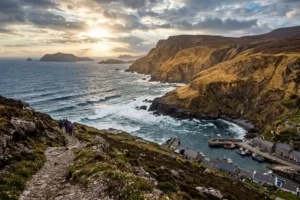
Ireland’s Wild Atlantic Way is less a single destination than an enormous collection of coastal experiences. The defined touring route stretches for around 2,500 kilometres through nine counties, connecting sea cliffs, beaches, islands, small towns, historic sites, and remote peninsulas.
Trying to drive the entire route in one short trip would miss the point. Choose one region and explore it slowly.
County Donegal offers rugged northern landscapes, while Galway and Connemara combine mountains, villages, and island excursions. County Clare brings the Cliffs of Moher and the unusual limestone scenery of the Burren.
Westport is a useful base for visiting Clew Bay and Achill Island. Clifden works well for Connemara, while Doolin provides access to coastal walks, traditional music, and ferry trips.
Allow extra time for narrow roads, photo stops, and sudden weather changes. Driving fewer kilometres usually leads to a better experience than racing between famous viewpoints.
6. São Miguel, the Azores
The Azores bring a volcanic twist to Europe’s Atlantic coast. This Portuguese archipelago contains nine islands located between mainland Europe and North America, with each offering a different mixture of cliffs, crater landscapes, hiking trails, villages, and marine adventures.
São Miguel is the easiest introduction for many first-time visitors. Its highlights include the crater lakes of Sete Cidades, Lagoa do Fogo, geothermal activity around Furnas, natural swimming areas, and the waterfront city of Ponta Delgada.
Whale and dolphin watching is another major reason to visit the islands. The surrounding Atlantic waters attract resident and migratory species, although sightings are naturally never guaranteed.
Plan at least five days for São Miguel. Weather can vary between different sides of the island, so keep your itinerary flexible and check conditions before driving to mountain viewpoints.
How to Choose Your Atlantic Coast Escape
Choose Sagres for surfing, sunshine, and dramatic Portuguese cliffs. San Sebastián is the best match when food and urban beaches are equally important, while Brittany suits travellers interested in fishing villages, seafood, islands, and coastal heritage.
Cornwall works well for classic seaside towns and walking holidays. Ireland’s west coast is ideal for a longer road trip, and the Azores are the strongest choice for volcanic landscapes and marine wildlife.
Whatever your destination, pack for changing conditions. Bring a waterproof layer, shoes suitable for uneven paths, and swimwear even when the forecast looks cool. Check tides, surf conditions, and local warnings before entering unfamiliar water, as Atlantic beaches can have powerful currents.
Europe’s best Atlantic coast destinations offer something more adventurous than a conventional resort holiday. Sagres provides golden cliffs and surf beaches, San Sebastián pairs ocean scenery with exceptional food, and Brittany combines coastal landscapes with strong regional culture.
Cornwall delivers harbour towns and walking trails, Ireland offers unforgettable road-trip country, and the Azores bring volcanoes and wildlife into the experience.
The right choice depends on whether you prefer cities, hiking, surfing, seafood, or remote natural scenery. Select one region, allow enough time to explore it properly, and avoid building an itinerary around driving alone.
Start comparing routes and travel seasons now, then plan an Atlantic escape with enough flexibility to follow the coastline wherever it leads.