Europe is basically one enormous gallery with cafés between the exhibition rooms. Its cities hold everything from Renaissance masterpieces and royal collections to experimental installations, fashion archives, photography, and street art.
The difficult part is deciding where to begin. The Best Cities for Art and Museum Lovers are not necessarily the places with the longest museum lists.
A great cultural destination should offer variety, easy access, inspiring architecture, and enough life outside the galleries to prevent museum fatigue. After several hours of paintings and sculptures, you need a good neighbourhood, a relaxed restaurant, or a riverside walk where your brain can breathe.
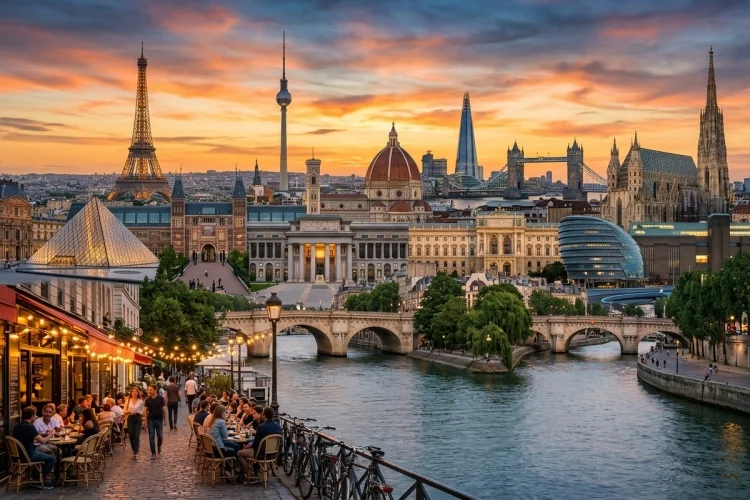
This guide covers seven European cities that deliver memorable art-focused trips: Paris, London, Madrid, Florence, Amsterdam, Vienna, and Berlin.
Each has a distinctive creative personality, so the right choice depends on whether you prefer classical paintings, modern art, ancient objects, design, or alternative culture.
1. Paris: Best for the Complete Art-History Experience
Paris is the obvious starting point because its museums cover an extraordinary range of periods and styles.
The Louvre alone contains art, decorative objects, sculptures, antiquities, jewellery, textiles, and historical artefacts from multiple civilisations. Its online database includes records for more than 500,000 works.
Do not expect to “finish” the Louvre in one visit. Choose two or three departments, spend around three hours inside, and leave before every gallery begins to look the same.
The Musée d’Orsay is the natural follow-up for Impressionist and Post-Impressionist art. Smaller institutions, including the Musée de l’Orangerie, Musée Rodin, and Musée Picasso, make it easy to build a themed Paris museum itinerary without returning to another enormous collection.
Make the City Part of the Exhibition
Art in Paris is not limited to museum walls. Walk through Montmartre, explore the galleries of Le Marais, browse illustrated books beside the Seine, and notice the sculptures, façades, and monuments filling public spaces.
Plan at least three days for an art-focused Paris break. One major museum per day is usually enough when you also want to enjoy the city itself.
2. London: Best for Variety and Free Collections
London suits travellers who want maximum choice. Its museum scene covers painting, design, fashion, photography, archaeology, natural history, transport, science, and global cultures.
Many major institutions offer free access to their permanent collections, including the National Gallery, Tate Modern, the British Museum, the Victoria and Albert Museum, the Science Museum, and the Natural History Museum. Temporary exhibitions may require paid tickets and advance reservations.
The National Gallery is ideal for European painting, while Tate Modern focuses on modern and contemporary work. The V&A is particularly rewarding for visitors interested in fashion, decorative arts, performance, furniture, and design.
London’s size means location matters. Group museums geographically instead of travelling from one side of the city to the other. Spend one day around South Kensington, another near Trafalgar Square and the West End, and a third around the South Bank and Tate Modern.
3. Madrid: Best for Spanish Masters
Madrid’s greatest strength is concentration. Three major institutions-the Prado, Reina Sofía, and Thyssen-Bornemisza-sit close to one another along the city’s famous cultural corridor.
The Prado is the essential first stop. It is particularly strong in European painting and holds outstanding collections by artists including Velázquez, Goya, El Greco, Rubens, Titian, and Bosch.
The museum is sometimes described as a collection of painters rather than individual paintings because several masters are represented by unusually large groups of works.
Reina Sofía takes the story into the twentieth century with Spanish modernism and international contemporary art. The Thyssen helps connect the periods covered by the other two museums, making Madrid one of Europe’s easiest cities for understanding the development of Western painting.
Leave time for Retiro Park after your museum visit. Fresh air, trees, and a slow lunch are excellent cures for cultural overload.
4. Florence: Best for Renaissance Art
Florence sometimes feels like a museum even when you are outdoors. Churches, public squares, palaces, bridges, sculptures, and historic workshops make Renaissance art part of the city’s everyday landscape.
The Uffizi Galleries are the headline attraction. Their collections include ancient sculptures and paintings ranging from the Middle Ages into later periods, with particularly important works from the Italian Renaissance. The wider Uffizi organisation also includes Palazzo Pitti and the Boboli Gardens.
Book the Uffizi in advance and choose an early entry when possible. Afterwards, visit the Accademia for Michelangelo’s David, explore the sculptures around Piazza della Signoria, or step inside churches containing artworks that would be major museum attractions elsewhere.
Florence is compact, but do not compress it into a single day. Three nights allow you to experience the galleries without ignoring the city’s markets, viewpoints, architecture, and Tuscan food.
5. Amsterdam: Best for Dutch Masters and Modern Creativity
Amsterdam offers a highly manageable combination of famous collections and contemporary culture. Several important institutions are grouped around Museumplein, reducing travel time between visits.
The Rijksmuseum presents roughly 800 years of Dutch art and history, with major works by Rembrandt, Vermeer, and other celebrated Dutch artists. Its collection also extends beyond paintings into decorative arts, historical objects, prints, and photography.
Nearby, the Van Gogh Museum provides a more focused experience centred on one artist’s development, influences, and personal story. The Stedelijk Museum shifts towards modern art and design, creating a useful contrast after a morning with the Old Masters.
Reserve one museum for the morning and another for late afternoon, with a canal walk or lunch between them. Amsterdam may be compact, but standing in galleries for six uninterrupted hours still feels exhausting.
6. Vienna: Best for Imperial Collections and Austrian Modernism
Vienna combines royal collections with the rebellious energy of modern Austrian art. The result is a city where formal palace galleries and innovative cultural spaces exist within walking distance of historic cafés.
The Kunsthistorisches Museum is the place for Old Masters, antiquities, and objects connected to the Habsburg collections. The Belvedere is closely associated with Gustav Klimt and Austrian art, while the Albertina is known for graphic works, prints, drawings, and exhibitions.
For a broader contemporary atmosphere, head to the MuseumsQuartier. The complex covers more than 114,000 square metres and houses dozens of cultural institutions, creative organisations, event spaces, shops, and restaurants.
Do not move directly from museum to museum. Vienna’s coffeehouses are useful cultural stops rather than wasted time. Sit down, order something sweet, and give yourself space to absorb what you have seen.
7. Berlin: Best for History and Experimental Art
Berlin’s art scene is less polished and more unpredictable than those of Paris or Vienna. Classical collections, archaeological objects, contemporary galleries, photography spaces, political art, and large-scale installations all belong to the city’s creative identity.
Museum Island provides the most obvious starting point. Located in central Berlin, the ensemble houses major collections relating to European art, ancient cultures, and the Mediterranean world.
Access and renovation arrangements can change, so check individual museum pages before planning your day.
Beyond the island, explore the Neue Nationalgalerie, Hamburger Bahnhof, Berlinische Galerie, and independent spaces across Kreuzberg and Mitte. Street art and repurposed industrial buildings also show how the city continues to reinvent its visual culture.
Berlin deserves at least three full days. Distances can be significant, and the most interesting creative experiences are not always near the famous monuments.
How to Plan an Art-Focused European City Break
Choose museums according to your interests rather than reputation. Visiting a world-famous institution means little when its collection does not excite you.
Limit yourself to one major museum and one smaller gallery per day. Book popular timed entries, but leave gaps for lunch, walking, and spontaneous discoveries. Comfortable shoes and a lightweight bag will improve the experience more than another hour of itinerary research.
Check weekly closing days before booking transport. Many museums also offer late openings on selected evenings, which can help you avoid peak daytime crowds.
Finally, make a short priority list before entering a large collection. Seeing ten works properly is often more memorable than rushing past two hundred simply to say you covered every room.
The Best Cities for Art and Museum Lovers offer much more than famous paintings. Paris delivers an unmatched journey through art history, London provides incredible variety, and Madrid brings visitors close to the Spanish masters.
Florence celebrates the Renaissance, Amsterdam balances Dutch heritage with modern design, Vienna combines imperial elegance with Austrian modernism, and Berlin keeps the experience experimental.
Choose your destination according to the art you genuinely enjoy, then build a relaxed itinerary around two or three priority museums. Reserve essential tickets, check current opening information, and leave time to experience the streets, architecture, cafés, and creative neighbourhoods outside the galleries.
Pick your favourite city, open its museum map, and start designing a cultural trip that inspires rather than overwhelms you.