Europe’s biggest capitals usually dominate weekend travel plans. Paris promises romance, Rome serves up ancient history, and Amsterdam fills social media feeds with canals and colourful houses.
They are popular for good reason, but crowded attractions, expensive accommodation, and tightly packed itineraries can make a quick escape feel surprisingly tiring. Fortunately, some of the continent’s most rewarding city breaks happen away from the usual tourist trail.
Europe’s Most Underrated Cities for a Weekend Break offer impressive architecture, excellent food, fascinating museums, and walkable neighbourhoods without demanding an entire week of your time.
This guide focuses on six cities that are often overlooked in favour of more famous neighbours. Ghent delivers medieval drama without Bruges-level attention, Graz mixes Austrian elegance with contemporary design, and Gdańsk adds Baltic atmosphere to a powerful historical story.
Zaragoza, Nantes, and Turin complete the list with distinctive food, art, and local character. None of these places is completely undiscovered. However, each offers enough variety for an engaging two- or three-night escape without making you feel trapped in a queue all weekend.
1. Ghent, Belgium: Medieval Beauty without the Rush
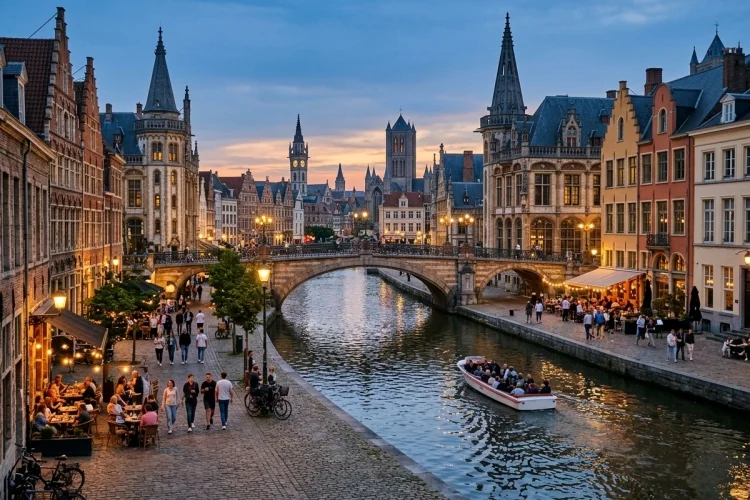
Ghent is sometimes treated as a quick stop between Brussels and Bruges, but it deserves a full weekend of its own. Its historic centre combines canals, Gothic towers, lively squares, street art, and one of Europe’s most dramatic urban castles.
Start beside Graslei and Korenlei, where historic façades line the River Lys. From there, walk towards the Castle of the Counts, St Bavo’s Cathedral, and the Belfry. The main sights are close together, making Ghent easy to explore without constantly checking transport maps.
The city also feels more lived-in than many perfectly preserved historic destinations. Students, cyclists, independent businesses, neighbourhood bars, and vegetarian restaurants give its medieval streets a youthful energy.
Spend Saturday exploring the old centre and take a canal trip when the weather cooperates. On Sunday, visit a museum, browse local shops around Patershol, or follow the city’s street-art route before settling in for a long Belgian lunch.
2. Graz, Austria: Old-World Charm with a Creative Side
Vienna and Salzburg receive most of Austria’s international visitors, leaving Graz comparatively overlooked. That makes the Styrian capital an excellent choice for travellers seeking elegant architecture, regional food, and a manageable city centre.
The best introduction is a walk through the Old Town before heading up Schlossberg hill. At the top, the famous Clock Tower overlooks the city’s red rooftops. You can walk, use the lift, or ride the funicular when you would rather save your energy for sightseeing.
Graz is especially interesting because historic courtyards and Renaissance façades sit beside playful contemporary structures. The Kunsthaus, with its unusual curved form, and the Murinsel platform floating in the river add a modern contrast to the traditional streets.
Food is another strong reason to visit. Local markets and restaurants showcase Styrian produce, including pumpkin-seed oil, regional cheeses, seasonal vegetables, and wine from the surrounding countryside. Two days are enough for the main attractions, although a third creates time for a vineyard or countryside excursion.
3. Gdańsk, Poland: Baltic Scenery and Powerful History
Gdańsk offers colourful waterfront architecture, maritime heritage, broad beaches, and some of modern Europe’s most significant historical sites. Its setting on Poland’s Baltic coast gives it a completely different atmosphere from Kraków or Warsaw.
Begin along the Royal Route and continue towards the Motława waterfront. Reconstructed merchant houses, historic gates, church towers, and riverside restaurants make the centre highly photogenic, but the city is more than a collection of attractive façades.
Its museums explore maritime trade, amber craftsmanship, wartime destruction, reconstruction, and the Solidarity movement.
The official tourism portal particularly highlights the city’s museums and cultural heritage, while the wider destination also includes easy access to neighbouring Sopot and the coast.
Allow one day for the historic centre and another for the museums. During warmer months, add a beach walk or short trip through the wider Tricity area.
4. Zaragoza, Spain: Roman History, Moorish Architecture, and Tapas
Travellers racing between Madrid and Barcelona often pass Zaragoza without stopping. Those who step off the train discover a city with Roman remains, two cathedrals, lively tapas streets, and one of Spain’s finest Islamic-era palaces.
The Basílica del Pilar dominates the riverside skyline and provides the natural starting point for a first visit. Nearby, La Seo Cathedral and the streets around El Tubo reveal different layers of Zaragoza’s architecture and dining culture.
The Aljafería Palace is the city’s essential historical attraction. Its surviving elements reflect Islamic, medieval Christian, Mudéjar, and royal influences, creating a fascinating architectural record within a single complex.
Zaragoza works particularly well for a food-focused weekend. Spend the evening moving between tapas bars rather than committing to one formal meal. Since many major attractions are concentrated around the old centre, two days provide enough time to explore without rushing.
5. Nantes, France: The Best Choice for Art and Imagination
Nantes is not the first city most travellers associate with a French weekend break. That is precisely why it feels refreshing. Instead of relying only on traditional monuments, the city has built its visitor experience around public art, playful design, industrial heritage, and unexpected urban spaces.
Its most famous attraction is Les Machines de l’Île, where enormous mechanical creatures occupy a former shipbuilding site. The project draws inspiration from machinery, wildlife, engineering, and the imaginative worlds associated with local author Jules Verne.
Elsewhere, the Château des ducs de Bretagne provides the historical counterpoint. Passage Pommeraye offers elegant nineteenth-century shopping architecture, while the city’s green line connects cultural attractions, artworks, gardens, and public spaces.
Following the marked route is an easy way to explore without designing a complicated itinerary. Nantes’ permanent art trail stretches through the city and encourages visitors to notice places they might otherwise walk past.
6. Turin, Italy: Grand Cafés, Museums, and Alpine Views
Turin is regularly overshadowed by Rome, Florence, Venice, and nearby Milan. Yet it has everything needed for a sophisticated Italian city break: Baroque squares, covered arcades, royal residences, excellent museums, chocolate, coffee, and views towards the Alps.
Begin around Piazza Castello, then visit the Royal Palace or walk beneath the city’s long porticoes. The Egyptian Museum is a major cultural highlight, while the Mole Antonelliana remains Turin’s most recognisable landmark.
The city’s historic cafés are central to its personality. Order a bicerin-a local drink made with coffee, chocolate, and cream-then spend time exploring neighbourhoods beyond the formal centre.
Official two- and three-day routes also suggest Piazza Carignano, the National Museum of the Risorgimento, Piazza Vittorio Veneto, and viewpoints near Monte dei Cappuccini. Turin’s compact central area makes these places relatively easy to combine over a weekend.
How to Pick the Right Underrated European City
Choose Ghent when you want canals, medieval architecture, and Belgian food without limiting yourself to a tiny historic centre. Graz is ideal for a relaxed mix of culture, design, and regional cuisine, while Gdańsk suits travellers interested in waterfront scenery and deeper modern history.
Zaragoza is the strongest option for Spanish food and layered architecture. Nantes works best for contemporary art, families, and curious travellers who enjoy unusual attractions. Turin is perfect when you want classic Italian elegance without following the busiest route through the country.
For a standard weekend, prioritise one city rather than combining several destinations. Arrive on Friday evening, dedicate Saturday to the essential attractions, and use Sunday for local neighbourhoods, markets, museums, or a relaxed lunch.
Stay close to the historic centre or a direct public-transport connection. Most importantly, avoid filling every hour. The advantage of visiting an underrated European city is having time to experience it rather than racing between famous photo spots.
Europe’s Most Underrated Cities for a Weekend Break prove that a memorable escape does not need to involve the continent’s biggest capitals.
Ghent offers canals and medieval character, Graz blends heritage with modern creativity, and Gdańsk combines Baltic beauty with important history. Zaragoza brings Spanish architecture and tapas, Nantes celebrates imagination, and Turin delivers Italian elegance beneath the Alps.
The right destination depends on the atmosphere you want, but each city can comfortably fill two or three days. Choose one that matches your interests, reserve any essential attractions, and keep part of the schedule open for spontaneous discoveries.
Instead of automatically booking another overcrowded capital, start comparing routes to these overlooked alternatives. Your next favourite European weekend may be somewhere you had never considered visiting.