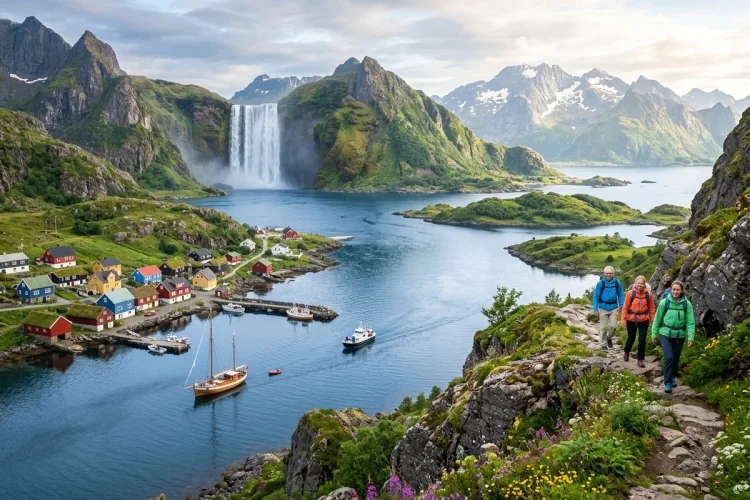
When temperatures rise across Europe, spending an entire holiday searching for shade can feel less relaxing than expected.
That is why more travellers are replacing traditional hot-weather breaks with a coolcation: a summer escape built around milder conditions, refreshing sea air, long daylight hours, and outdoor adventures.
The Best Northern European Destinations for a Summer Coolcation offer much more than cooler weather. You can hike beneath the midnight sun in Norway, drive past waterfalls in Iceland, sail through Swedish islands, or explore misty villages in the Faroe Islands.
Cities such as Helsinki also combine waterfront scenery with museums, food markets, saunas, and easy ferry trips. Northern European weather can still be unpredictable, but that is part of the experience.
A sunny morning may become a breezy afternoon, so light layers and a waterproof jacket are essential.
For travellers who prefer mountains, coastal walks, quiet cities, and dramatic scenery over intense heat, these destinations provide an ideal alternative to the crowded Mediterranean summer.
1. Iceland: Best for Road Trips and Otherworldly Scenery
Iceland is one of the most obvious choices for a European summer coolcation. Its landscapes include glaciers, geothermal areas, volcanic fields, waterfalls, black-sand beaches, and vast stretches of open countryside.
Summer brings extremely long days, with some parts of the country experiencing almost continuous daylight. Those extended hours are useful for road trips because you can explore later in the evening without feeling as though the day is ending too soon.
Explore Beyond Reykjavík
Reykjavík is a practical starting point, but Iceland’s greatest appeal is outside the capital. A first-time route could include the Golden Circle, the waterfalls and beaches of the South Coast, and the Snæfellsnes Peninsula.
Travellers with at least ten days can consider driving the Ring Road. However, distances are often longer than they appear, and sudden weather changes may slow the journey. Avoid building an itinerary that requires several hours of driving every day.
Summer is also the only practical season for reaching certain remote landscapes, including parts of the Icelandic Highlands. Even then, some mountain roads require suitable vehicles and careful planning.
2. Lofoten, Norway: Best for Mountains, Beaches, and Midnight Sun
The Lofoten Islands sit above the Arctic Circle in northern Norway. Sharp mountain peaks rise almost directly from the sea, while fishing villages, sheltered bays, and pale beaches create some of Scandinavia’s most memorable scenery.
During summer, Lofoten is known for the midnight sun. This makes it possible to hike, photograph beaches, or kayak late into the evening while the landscape remains illuminated.
Popular bases include Svolvær, Henningsvær, Leknes, Reine, and Hamnøy. Travellers interested in photography may prefer the western islands, while Svolvær offers convenient access to tours, restaurants, and boat connections.
Lofoten becomes busy during peak summer, and roads between villages can be narrow. Book accommodation early, allow extra time between stops, and use designated parking areas rather than stopping beside the road.
3. The Faroe Islands: Best for a True Weather-Cooling Escape
Few destinations fit the coolcation concept as naturally as the Faroe Islands. Located in the North Atlantic, the archipelago offers dramatic cliffs, green valleys, waterfalls, colourful villages, seabird colonies, and constantly changing skies.
The official tourism board describes typical summer temperatures of around 13-18°C, or 55-65°F. Rain, wind, fog, and sunshine may all appear during the same day, so waterproof clothing matters more than fashionable summer outfits.
Build Flexibility into Your Itinerary
Tórshavn works well as a base, but smaller communities reveal the islands’ quieter side. Consider visiting Saksun, Gjógv, Tjørnuvík, or the island of Vágar, where the village of Gásadalur sits near the famous Múlafossur waterfall.
Many islands are connected through roads, bridges, ferries, and subsea tunnels. Renting a car offers flexibility, although buses and ferries can also support a slower trip.
Plan at least five days and avoid assigning only one opportunity to an important hike or boat tour. Poor visibility can interrupt plans, so keeping a spare day increases your chances of enjoying the landscape safely.
4. Stockholm and Its Archipelago: Best for City and Island Life
Stockholm is an excellent choice for travellers who want a cultural city break without giving up access to nature. The Swedish capital offers historic neighbourhoods, museums, restaurants, parks, and waterfront walks, but its archipelago is the real summer highlight.
The Stockholm archipelago contains around 30,000 islands, rocks, and skerries, stretching approximately 80 kilometres east into the Baltic Sea. Regular ferries make it possible to leave the city centre and reach peaceful islands without renting a car.
Vaxholm is a straightforward option for first-time visitors, while Grinda is popular for walking, swimming, and relaxed overnight stays. Travellers seeking quieter surroundings can continue farther into the outer archipelago.
Do not treat every island as a quick photo stop. Staying overnight in a cabin, guesthouse, or small hotel lets you enjoy the slower rhythm of Swedish summer evenings.
5. Helsinki, Finland: Best for Saunas and Seaside Relaxation
Helsinki feels calm, compact, and closely connected to the sea. It is a particularly good cool summer destination for travellers who prefer design, food, public saunas, island picnics, and walkable neighbourhoods.
The Helsinki archipelago includes more than 300 islands and around 130 kilometres of shoreline. Ferries and seasonal water buses connect the city with destinations such as Suomenlinna, Pihlajasaari, Vallisaari, Lonna, and Uunisaari.
Suomenlinna is the easiest island excursion and combines coastal scenery with historic fortifications. Pihlajasaari is better suited to picnics, beaches, and walking trails, while Lonna offers a compact getaway close to the city.
Back on the mainland, visit Market Square, explore the Design District, and try a traditional or modern public sauna. Even on bright summer days, coastal winds can feel cool, so carry an extra layer during ferry journeys.
6. The Scottish Highlands and Islands: Best for Wild Coastal Adventures
Scotland offers long summer days without the intense heat often found farther south. The Highlands and islands are especially appealing for travellers interested in scenic drives, castles, lochs, wildlife, beaches, and countryside walks.
Inverness makes a practical gateway to Loch Ness, the northern Highlands, and the Moray Firth. Travellers with more time can continue towards the Isle of Skye, the North Coast 500 route, or the Outer Hebrides.
The Outer Hebrides are particularly suitable for a coolcation, with Atlantic breezes, open landscapes, and wide white-sand beaches. Scotland’s official tourism guidance recommends summer for island hopping, outdoor activities, coastal trips, and long daylight hours.
Weather changes quickly, even during July and August. Pack waterproof shoes and layers, and avoid assuming that every hiking day will be dry. Having a mixture of outdoor and indoor plans helps keep the trip enjoyable.
How to Plan a Northern Europe Coolcation
The best destination depends on the kind of holiday you prefer. Choose Iceland for a self-drive adventure, Lofoten for mountain scenery, and the Faroe Islands for quiet landscapes and genuinely mild summer conditions.
Stockholm and Helsinki are easier options for travellers who want museums, restaurants, and reliable public transport alongside island excursions. The Scottish Highlands suit those who enjoy historic sites, road trips, walking routes, and rugged coastlines.
June generally offers very long days and slightly smaller crowds, while July and August provide the widest selection of tours, ferries, and seasonal services. However, accommodation in popular areas can sell out months ahead.
Pack breathable base layers, a warm mid-layer, waterproof outerwear, and comfortable shoes. Sunglasses and sunscreen are still necessary because long daylight and reflected light can be surprisingly strong, even when the air feels cool.
The Best Northern European Destinations for a Summer Coolcation combine refreshing temperatures with scenery that encourages you to spend time outdoors.
Iceland delivers volcanic road trips, Lofoten offers midnight-sun adventures, and the Faroe Islands provide misty cliffs and peaceful villages. Stockholm and Helsinki balance island life with city culture, while the Scottish Highlands bring wild beaches, lochs, and unforgettable driving routes.
A successful coolcation requires flexibility. Northern weather can change quickly, but suitable clothing and a relaxed schedule make those changes easy to manage.
Choose the destination that best matches your interests, book popular accommodation early, and leave enough space for unexpected stops. Start planning your cooler summer escape now and discover why heading north can be far more refreshing than chasing another heatwave.