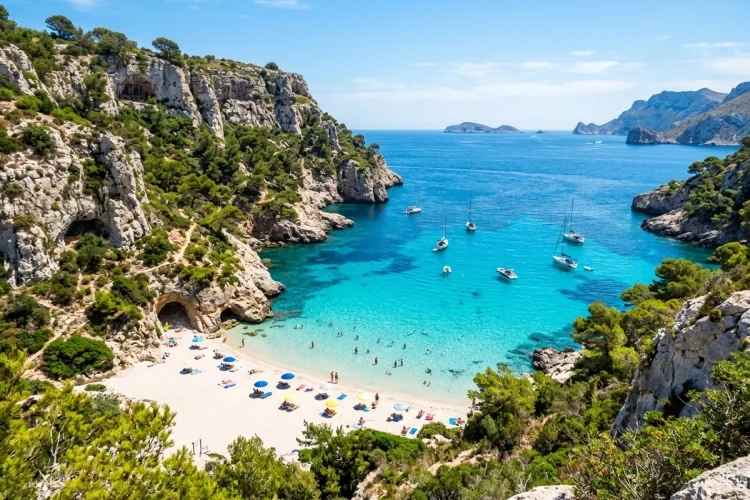
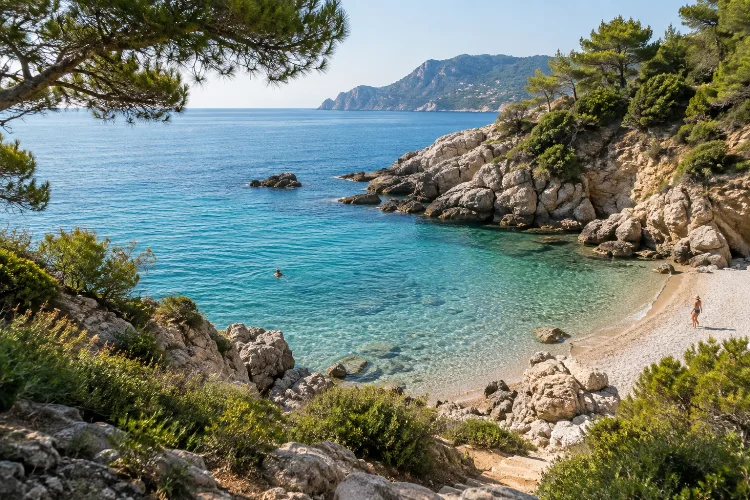
Mediterranean beaches in July and August can look very different from the peaceful photographs that convinced you to book the trip.
That empty turquoise cove from your travel search may suddenly contain hundreds of towels, packed car parks, beach clubs, and a queue for the nearest café.
The good news is that finding quieter Mediterranean beaches in peak season is still possible. You just need to stop searching for beaches the same way everybody else does.
The Mediterranean coastline stretches across numerous countries and thousands of islands, so crowds are rarely distributed evenly.
Famous sandy beaches near resorts fill quickly, while rocky coves, beaches requiring a short hike, less fashionable islands, and stretches of coastline farther from large towns can remain surprisingly peaceful.
Timing matters too. Arriving early, researching access in advance, and choosing where you stay can completely change your beach experience.
Here is how to escape at least some of the summer crowds without giving up the warm water and glorious Mediterranean sunshine you came for.
Stop Searching Only for the “Best Beaches”
Type “best beaches in Mallorca” or “most beautiful beaches in Greece” into a search engine and you immediately create a problem.
Thousands of other travellers are reading exactly the same recommendations.
Instead, search for terms such as small coves, wild beaches, unserviced beaches, rocky swimming spots, local beaches, or beaches accessible on foot. These often reveal locations that are less convenient but considerably calmer.
Menorca is a good example. Its official tourism site notes that some northern beaches are harder to access, which contributes to a quieter atmosphere.
The island also has more than 70 beaches and coves, giving visitors far more options than the handful that dominate social media.
This does not mean every hidden cove will be empty in August. It simply improves your odds.
Look for Beaches That Require a Little Effort
Convenience attracts crowds.
A wide sandy beach beside a large car park, bus stop, hotel district, and collection of restaurants will naturally receive more visitors than a cove requiring a 30-minute walk.
That inconvenience can become your advantage.
Cala Fustam on Menorca, for example, is reached by boat or a substantial hike. Official tourism information describes it as one of the most secluded beaches on the island’s southern coast and advises visitors to bring food, water, and proper footwear.
The same principle appears in Greece. On tiny Trizonia, several beaches require 20- to 30-minute walks and have no facilities. Visitors are advised to bring their own supplies and suitable shoes.
When researching, zoom beyond the obvious parking symbols on digital maps. Look for footpaths following the coastline or beaches where reviews repeatedly mention a walk.
A little effort often filters out casual day-trippers.
Choose Smaller Islands and Secondary Coastal Areas
You do not necessarily need to abandon popular countries. You may simply need to choose a different island or coastline.
Greece illustrates this perfectly. Santorini and Mykonos attract enormous attention, but the country contains many smaller islands where the pace is dramatically slower.
Tilos is promoted by Greece’s official tourism organisation as an island focused on authenticity, nature, and relaxation away from heavy crowds. Beaches range from easily accessible Livadia to secluded shores such as Lethra, which requires around a 40-minute walk.
Donousa in the Small Cyclades provides another alternative. Its small size, hiking trails, natural coves, and slower tourism scene make it quite different from Greece’s headline islands.
Mainland coastlines deserve attention as well. Around Astakos in western Greece, small coves stretch toward Mytikas, including beaches without facilities that naturally recieve fewer casual visitors.
The lesson is simple: choose the country first, but do not automatically choose its most famous island.
Go Early – Really Early
Arriving at 11 a.m. and hoping for an empty Mediterranean beach in August is optimistic.
Try 7:30 or 8 a.m.
Early mornings often provide calmer water, cooler temperatures, easier parking, and much more space. You may have two peaceful hours before most holidaymakers finish breakfast.
Even on popular islands, this can transform the experience.
Late afternoons are another option. Families often begin leaving beaches around 4 or 5 p.m., while sunset may not arrive until considerably later during midsummer.
There is also a practical bonus: the Mediterranean sun is intense around midday. Spending the hottest hours having lunch, resting, or exploring an indoor attraction can make the entire day more comfortable.
On famous beaches, timing may make a bigger difference than location.
Explore Rocky Coves, Not Only Perfect Sand
Instagram has trained travellers to chase one specific type of beach: white sand, shallow turquoise water, and dramatic cliffs.
Those beaches become crowded precisely because everybody wants the same photograph.
Expand your definition of a good swimming spot.
Mallorca, for example, contains numerous rocky coves as well as its famous sandy beaches. Official Balearic tourism information describes Cala Blanca near Camp de Mar as a quiet location even during summer. Reaching it involves a short walk, and the beach offers few facilities.
Calonet de s’Almadrava provides another example. It is a rocky swimming area without the classic broad sandy shoreline and is described as mostly solitary compared with the island’s busier resort beaches.
Pack water shoes and a snorkel and these places suddenly become much more appealing.
Rocky entries are not suitable for everyone, particularly travellers with limited mobility or very young children. But for capable swimmers, they can open up a completely seperate category of quieter coastal spots.
Stay Away from the Biggest Resort Hubs
Where you book your accomodation can determine whether escaping crowds feels easy or exhausting.
If your hotel is surrounded by huge resorts and the nearest five beaches are famous, you may spend every morning driving through traffic looking for somewhere quieter.
Instead, consider staying in a smaller coastal town within reach of several beaches.
Corsica demonstrates how much variation one island can offer. France’s official tourism site highlights more remote northern locations such as Barcaggio, Tamarone, and Ostriconi alongside the island’s internationally famous southern beaches.
Tamarone is specifically noted for retaining a peaceful character even during peak season, partly because reaching it involves using a coastal trail.
Malta works similarly. Visitors naturally focus on famous swimming spots, yet its tourism authority also highlights quieter options such as St Marija Bay, St Nicholas Bay, Għar Lapsi, and Ġnejna Bay.
Staying near a cluster of lesser-known beaches lets you change plans quickly when one looks busy.
Use Satellite Maps Before You Travel
Satellite view is one of the most useful beach-planning tools available.
Instead of simply looking at beach names, examine the surrounding area.
A huge car park usually suggests easy access and potentially larger crowds. Rows of hotels immediately behind the sand tell a similar story. Beach clubs, marinas, and dense residential developments are other clues.
Then look along the neigbouring coastline.
You may notice another small bay 500 metres away connected by a trail, or a rocky section without obvious road access. Sometimes the quieter alternative is incredibly close to the famous beach.
Also check the orientation of the coast. Wind direction can dramatically affect swimming conditions, especially around islands. A quiet-looking cove is not worth pursuing if conditions make entering the water unsafe.
Local tourism websites, lifeguard information, marine forecasts, and recent visitor reports should always take priority over an attractive map image.
Consider Beaches Accessible by Boat
The Mediterranean looks completely different from the water.
Small boats, water taxis, kayaking trips, and local excursions can reach coves that are difficult or impossible to access by road.
Italy’s Molara Island, off Sardinia, is accessible only by sea and forms part of the Tavolara-Punta Coda Cavallo protected marine area. Its coastline contains caves, coves, and small beaches surrounded by largely undeveloped nature.
Greek islands offer similar possibilities. Visit Greece notes that several remote beaches on Tilos are reached by boat, while parts of the Diapontia Islands contain beaches accessible only by sea or walking trails.
A private boat is obviously not necessary. Shared excursions and local water taxis can be considerably cheaper.
Just remember that a boat-only beach advertised by dozens of tour companies may become busy between late morning and early afternoon. Ask operators when excursion traffic is lowest.
Never Confuse “Quiet” with “Safe”
Remote beaches come with trade-offs.
There may be no lifeguard, café, drinking water, toilets, shade, mobile signal, or easy emergency access. That romantic empty bay can become uncomfortable very quickly if you arrive without water at midday.
Bring enough drinking water, sun protection, suitable footwear, and a fully charged phone. Check sea conditions before entering unfamiliar water and be particularly careful around rocky shores.
Do not assume that because somebody uploaded a photograph of themselves swimming there, conditions are always safe.
Protected areas also deserve extra care. Stay on established paths, take rubbish away, avoid damaging vegetation, and never remove sand, stones, shells, or marine life where local rules prohibit it.
The goal is to find quieter nature without helping destroy the reason it was peaceful in the first place.
Finding quieter Mediterranean beaches in peak season is less about discovering one magical secret beach and more about changing the way you travel.
Skip the headline beach lists, explore smaller islands and secondary coastlines, consider rocky coves, and accept that the best places may involve walking.
Arrive early, study satellite maps before leaving your hotel, and keep several backup options ready in case your first choice is unexpectedly crowded.
Most importantly, do not expect complete solitude in July or August. Even a beautiful beach with 30 people can feel wonderfully peaceful compared with one holding 3,000.
Do a little more research, pack proper shoes and plenty of water, and treat the Mediterranean coastline as somewhere to explore rather than simply somewhere to place a towel.