Ljubljana rarely gets the same attention as Paris, Rome, Prague, or Vienna. In fact, plenty of travellers planning a European holiday still struggle to point to Slovenia’s capital on a map.
That may be one of Ljubljana’s greatest advantages.
The city has elegant architecture, a hilltop castle, riverside cafés, colourful markets, green parks, excellent food, and enough cultural attractions to fill several days.
Yet it remains compact enough that you can walk between many highlights without spending half your holiday underground on a metro.
Why Ljubljana deserves a place on your European travel list becomes obvious once you experience its pace.
Instead of rushing between giant attractions, you can wander beside the Ljubljanica River, cross unusual bridges, stop for coffee, explore a food market, and still have time to hike up to a castle before dinner.
It feels like a proper European capital, just one that somehow remembered that travelling is supposed to be relaxing.
Ljubljana Is Refreshingly Easy to Explore
One of Ljubljana’s biggest strengths is its human scale.
The historic centre is largely pedestrian-friendly, and the city centre has been closed to regular car traffic since 2008.
Ljubljana Tourism reports around 542 square metres of green space per resident, helping explain why the capital frequently feels more relaxed than cities of a similar importance.
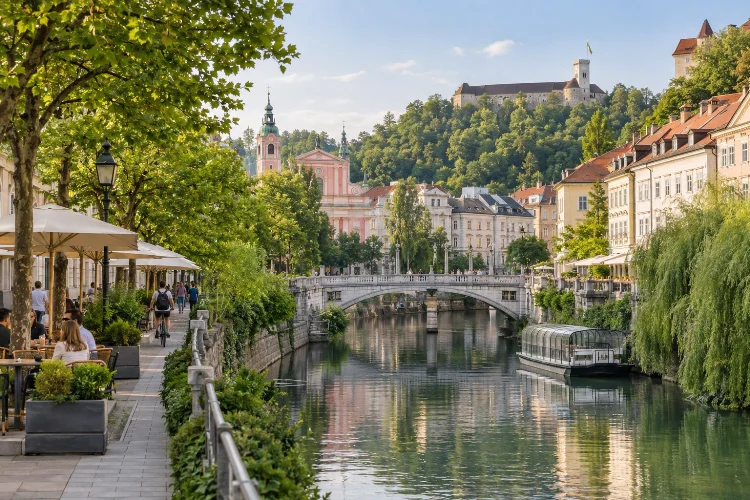
Start around Prešeren Square, cross the famous Triple Bridge, and follow the Ljubljanica through the Old Town.
Within a fairly small area, you can reach the Central Market, Dragon Bridge, Town Square, Ljubljana Cathedral, Cobblers’ Bridge, and numerous restaurants and cafés.
This walkability changes the travel experiance. Instead of planning your day around complicated transport connections, you can simply choose a direction and explore.
That makes Ljubljana particularly attractive for a short European city break.
The Old Town Feels Historic Without Becoming a Museum
Ljubljana’s Old Town has the colourful façades, cobbled lanes, church towers, and riverside architecture people often imagine when planning a Central European holiday.
But it does not feel preserved purely for tourists.
People meet for coffee beside the river, shop at the market, cycle through the centre, and gather around its squares. Restaurants and small shops occupy buildings that form part of the everyday city rather than a separated historical district.
Architect Jože Plečnik had an enormous influence on the appearance of modern Ljubljana. His designs include bridges, markets, promenades, public spaces, and institutions that were created to connect different parts of the city.
UNESCO added The Works of Jože Plečnik in Ljubljana – Human Centred Urban Design to the World Heritage List in 2021, recognising how his work reshaped the city while integrating existing architecture and natural spaces.
The Triple Bridge is perhaps his most recognisable contribution. Even visitors who know nothing about architecture usually notice how unusual it feels to have three pedestrian crossings fanning across one small section of river.
Ljubljana Castle Gives You the Classic City View
Look upward from almost anywhere in the historic centre and you will eventually spot Ljubljana Castle sitting above the rooftops.
The fortress has watched over the city for more than 900 years and remains one of Ljubljana’s defining landmarks. Visitors can walk up Castle Hill or take the funicular from near the Central Market and Dragon Bridge.
Walking is the better choice if the weather is pleasant and you want the exercise. The funicular is much more appealing after a long day of sightseeing.
Once at the top, spend time looking over the terracotta roofs before rushing inside. On clear days, the surrounding landscape and distant Alps help reveal something important about Ljubljana: nature never feels very far away.
A castle visit also combines easily with the Old Town, meaning you do not have to sacrifice an entire day to see one of the city’s major attractions.
The Riverfront Is Basically Ljubljana’s Living Room
Some cities are built around a central square. Ljubljana seems to organise much of its social life around the Ljubljanica River.
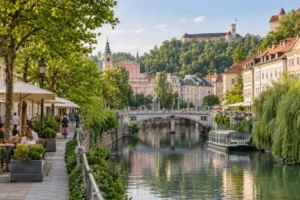
Cafés and restuarants line the embankments, while bridges constantly connect one side of the compact centre with the other. During warmer months, outdoor tables turn parts of the riverbank into long social terraces.
You can walk beside the water, take a sightseeing boat, or even see people paddleboarding beneath the bridges.
The atmosphere becomes especially pleasant toward the evening. Instead of racing towards another monument, grab a drink, find a riverside table, and watch the city slow down.
This is part of Ljubljana’s charm that does not translate particularly well to a checklist. Many memorable moments here involve doing very little.
It Is One of Europe’s Greener Capital Experiences
Ljubljana was named European Green Capital in 2016, and its greenery goes far beyond a few decorative flower beds.
Tivoli Park begins surprisingly close to the centre and extends toward the wooded hills of Rožnik and Šišenski hrib. Visitors can move from urban streets to walking paths surrounded by trees without travelling to the edge of the city.
Inside Tivoli, the Jakopič Promenade functions as an outdoor gallery and leads toward Tivoli Mansion. The park also contains gardens, sculptures, recreational spaces, and plenty of room to simply sit somewhere quiet.
That balance between city and nature makes Ljubljana especially appealing if larger capitals sometimes leave you exhausted.
One morning can involve museums and architecture. The afternoon can involve a genuine woodland walk.
Ljubljana’s Food Scene Is Better Than Many Visitors Expect
Slovenian food reflects the country’s geographical position between the Alps, Mediterranean, Pannonian Plain, Balkans, and Central Europe.
In Ljubljana, that translates into far more variety than first-time visitors often expect.
Look for štruklji, rolled dumplings that can be prepared with sweet or savoury fillings, Carniolan sausage, potica, hearty soups, and dishes using local cheeses, vegetables, and seasonal produce.
Ljubljana Tourism’s Taste Ljubljana programme highlights both traditional dishes and modern reinterpretations made with locally sourced ingredients.
The Central Market is a good introduction. Its open-air areas, covered market, small food businesses, and Plečnik-designed riverside colonnade make it both a sightseeing stop and somewhere locals genuinely use.
From roughly mid-March until the end of October, Fridays also bring the Open Kitchen food market, where participating Slovenian restaurants serve a wide range of dishes at Pogačarjev trg.
Come hungry.
You Can Experience the City Without Constantly Queuing
Europe’s most famous destinations can sometimes feel like logistical exercises.
Reserve the museum three months ahead. Queue for another attraction. Fight through crowds to take one photograph. Repeat tomorrow.
Ljubljana generally offers a more relaxed alternative.
Yes, popular areas become busy, particularly during summer weekends, but sightseeing tends to feel less dominated by giant queues and landmark-to-landmark pressure.
Its neigbourhoods, riverbanks, parks, architecture, and markets also mean many enjoyable experiences do not require an entry ticket at all.
This makes Ljubljana a strong destination for travellers who prefer spontaneous exploration.
You can have a rough plan in the morning and still change it completely when you discover an interesting courtyard, café, gallery, or street.
Ljubljana Is an Excellent Base for Seeing More of Slovenia
Another reason to stay longer is what lies outside the city.
Slovenia is compact, making Ljubljana useful as a base for day trips. Lake Bled, with its island church and cliff-top castle, is among the country’s best-known destinations.
Postojna Cave offers an entirely different landscape underground and is also commonly visited from the capital. Ljubljana Tourism promotes both among its major day-trip options.
You could therefore spend several nights in one hotel while exploring dramatically different environments.
Other possibilities include Škocjan Caves, alpine valleys, wine regions, and smaller historical towns, depending on your schedule and transport arrangements.
For travellers planning a wider Central European trip, Slovenia can also fit naturally between Austria, Italy, Croatia, and Hungary.
How Long Should You Spend in Ljubljana?
Two full days provide enough time for the principal sights, but three days is a better first visit.
Day one can focus on the Old Town, river, bridges, Central Market, and castle. Day two leaves space for Tivoli Park, museums, architectural sites, and a slower evening beside the river.
A third day lets you explore more creative areas or simply enjoy the city without a timetable.
Add another day or two if you want Ljubljana to function as a base for places such as Bled or Postojna.
The surprizing thing is that many travellers arrive expecting Ljubljana to be a one-night stop and leave wishing they had booked longer.
Ljubljana does not need enormous monuments or a packed collection of world-famous attractions to earn its place on a European itinerary.
Its appeal comes from how naturally everything fits together. Historic streets meet green parks, Plečnik’s architecture meets lively markets, and a medieval castle watches over cafés beside a river that seems to pull the entire city together.
Most importantly, Ljubljana gives you room to enjoy Europe rather than simply race through it.
If your next trip includes Central Europe, resist treating Slovenia as somewhere to pass through on the way to Italy, Austria, or Croatia.
Give Ljubljana at least two or three days, walk rather than rush, try the local food, and leave enough time to discover why this small capital tends to stay in people’s memories.