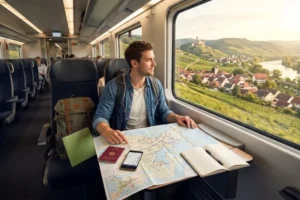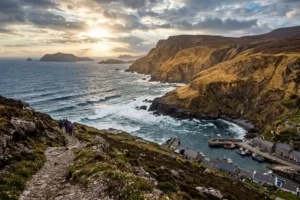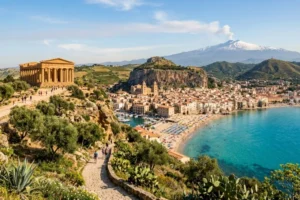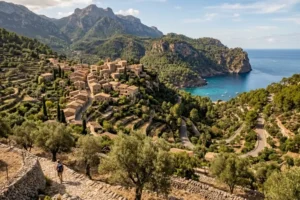
Renting a car can be useful in rural Europe, but it can also introduce parking fees, unfamiliar road signs, toll systems, traffic restrictions, and the constant fear of entering the wrong medieval street.
For many city breaks and island escapes, leaving the car behind is not a limitation-it is an upgrade. The Best Car-Free Destinations in Europe allow you to explore through walking, trains, trams, bicycles, ferries, and mountain cable cars.
Some, such as Zermatt and Hydra, restrict private vehicles almost entirely. Others, including Ljubljana, Ghent, and Copenhagen, have made their centres so pedestrian-friendly that driving would only make the trip more complicated.
Travelling without a vehicle can also help you slow down. You notice hidden courtyards, local bakeries, waterfront paths, and neighbourhood cafés that are easy to miss from behind a windscreen.
These six destinations combine straightforward public transport with memorable scenery, making them excellent choices for a relaxed European holiday.
1. Venice, Italy: Best for Exploring by Foot and Water
Venice is the classic car-free European destination. Once you reach the historic centre, your main transport options are walking and travelling by boat. The absence of ordinary roads creates an atmosphere that feels completely removed from a typical city break.
Begin around St Mark’s Square, then explore quieter areas such as Cannaregio, Castello, or Dorsoduro. Venice becomes much more enjoyable when you stop trying to follow the quickest route and accept that getting slightly lost is part of the experience.
Vaporetti function as the city’s public water buses, connecting major neighbourhoods, railway terminals, and lagoon islands. ACTV tickets are available for individual journeys or periods ranging from one to seven days, which can be useful when you plan to visit Murano, Burano, or the Lido.
Pack lightly because bridges, steps, narrow lanes, and crowded boats make large suitcases inconvenient. Staying near a vaporetto stop can also save considerable energy.
2. Zermatt, Switzerland: Best for an Alpine Escape
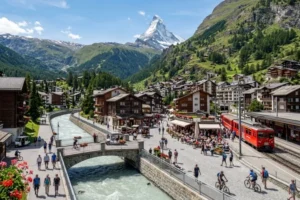
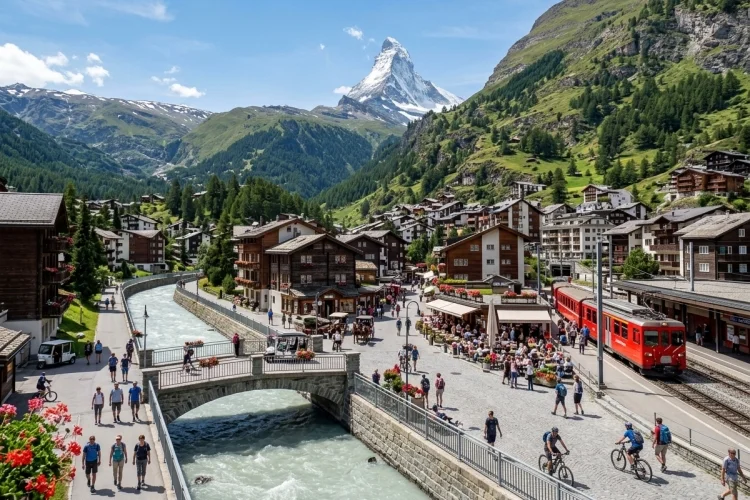
Zermatt offers proof that a mountain holiday does not require a rental car. The Swiss resort is closed to normal private traffic, and visitors driving into the region must leave their vehicles in Täsch before continuing by train or authorised transfer.
The village itself is compact enough to explore on foot. Small electric taxis operate locally, while mountain railways, funiculars, and cable cars provide access to viewpoints, ski areas, and hiking routes.
The Gornergrat Railway is a popular choice for views towards the Matterhorn, while cable-car connections lead towards Matterhorn Glacier Paradise. Travellers interested in hiking can use the lifts to reach higher trails without tackling every metre of elevation on foot.
Zermatt works in every season, although the experience changes dramatically. Winter suits skiing and snowy scenery, while summer brings walking trails, mountain lakes, and longer daylight hours.
3. Hydra, Greece: Best for a Peaceful Island Break
Hydra feels refreshingly simple. Cars are not allowed on the Greek island, and its harbour town is explored primarily on foot. Traditional stone buildings rise above the waterfront, while narrow lanes lead towards churches, viewpoints, and residential neighbourhoods.
Most visitors arrive by ferry from Piraeus or another Saronic Gulf island. After disembarking, cafés, restaurants, galleries, shops, and accommodation are concentrated around the harbour.
Spend the morning walking along the coast towards Kamini or Vlychos, then return for a long waterfront lunch. Water taxis can help you reach beaches and settlements that are farther from the main town.
Hydra is better for relaxed swimming, walking, art, and quiet evenings than for large sandy resorts or energetic nightlife. Stay for at least two nights rather than squeezing the island into a rushed day excursion from Athens.
4. Ljubljana, Slovenia: Best for a Relaxed Green City Break
Ljubljana is not entirely car-free, but its centre shows how pleasant a capital can become when pedestrians take priority. The central area has been closed to normal motor traffic since 2007 and includes around 20 hectares of pedestrian space.
This means you can walk between Prešeren Square, the Central Market, Triple Bridge, Dragon Bridge, and the riverside cafés without constantly negotiating traffic. Ljubljana Castle is accessible by foot or funicular, while bicycles are useful for reaching parks and neighbourhoods beyond the centre.
Small electric Kavalir vehicles operate within the pedestrian zone and can assist passengers who have limited mobility or need an easier way to cross the centre.
Ljubljana also works well as a public-transport base for seeing more of Slovenia. Organised excursions and regional connections make it possible to visit destinations such as Lake Bled without collecting a rental car immediately.
5. Ghent, Belgium: Best for Medieval Streets and Canals
Ghent is easy to reach by train and even easier to explore once you arrive. Its car-free centre is designed around pedestrians and cyclists, while buses and trams connect districts that are farther apart.
Walk from the railway area towards Graslei and Korenlei, then continue to the Castle of the Counts, St Bavo’s Cathedral, and the streets of Patershol. Most major sights are close enough to combine without repeatedly using public transport.
The city feels historic without becoming lifeless. Students, local markets, independent shops, museums, and waterside restaurants give the medieval centre a lively atmosphere.
Ghent also provides a convenient base for Belgian rail trips. Bruges, Brussels, and Antwerp can be visited without worrying about parking or low-emission rules. Travellers who do arrive by car are encouraged to use Park and Ride facilities outside the centre.
6. Copenhagen, Denmark: Best for Cycling and Public Transport
Copenhagen is not legally car-free, but visitors rarely need a vehicle. The city’s official tourism board describes bicycles and public transport as the easiest and fastest ways to get around.
Central neighbourhoods are relatively compact, and cycle lanes make it practical to move between Nyhavn, Christianshavn, the lakes, Frederiksberg, and Nørrebro. First-time cyclists should learn local signalling rules and avoid stopping unexpectedly in busy lanes.
The metro is another major advantage. All metro lines operate around the clock, with frequent services during the day and reduced but continuing departures overnight.
The airport is connected to central Copenhagen by metro, allowing you to begin the trip without arranging a taxi or rental car. Once settled, you can combine walking, cycling, trains, buses, and harbour buses depending on the weather and distance.
How to Plan a Car-Free European Holiday
Choose accommodation near a railway station or direct public-transport route, but check the immediate neighbourhood before booking. Being two metro stops from the centre may be more convenient than staying in a beautiful but isolated property.
Pack luggage you can carry independently. Railway platforms, ferry terminals, historic bridges, and older hotels may include stairs, uneven paving, or limited lift access.
Download official transport apps and save tickets for offline use. Check whether tickets must be purchased before boarding, validated at a machine, or activated inside an app.
Avoid assuming public transport operates equally late every day. Sunday, holiday, rural, and seasonal timetables may differ considerably from weekday city services.
Most importantly, build your itinerary around neighbourhoods rather than individual attractions. A car-free trip feels effortless when each day follows a natural walking route instead of sending you backwards and forwards across the destination.
The Best Car-Free Destinations in Europe show that travelling without driving can make a holiday simpler, calmer, and more immersive.
Venice replaces roads with canals, Zermatt uses trains and mountain lifts, while Hydra offers an island escape free from ordinary traffic. Ljubljana and Ghent provide peaceful pedestrian centres, and Copenhagen makes cycling and public transport feel like the natural choice.
Choose a destination that matches your preferred pace, book accommodation near useful connections, and travel with manageable luggage. Instead of spending time searching for parking or studying unfamiliar road rules, you can focus on scenery, food, architecture, and local neighbourhoods.
Pick one destination from this guide, check the rail or ferry connections, and start planning a European escape where the car keys can stay at home.