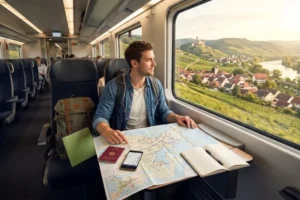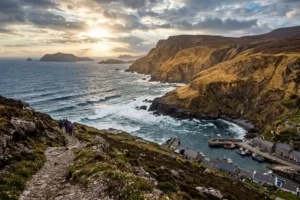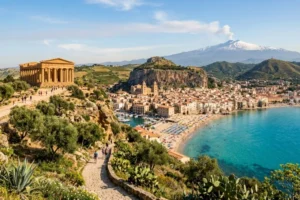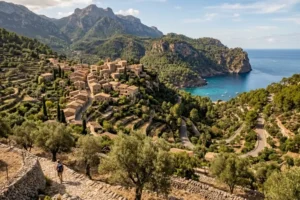
Flying may get you around Europe quickly, but it rarely gives you much to look at beyond an airport terminal. A scenic train journey is different.
Mountains, lakes, vineyards, medieval villages, and dramatic coastlines unfold outside your window while you relax with a coffee and avoid the stress of driving.
Europe’s Most Scenic Train Journeys range from short mountain rides to full-day adventures crossing international borders. Some use panoramic carriages with oversized windows, while others are ordinary regional services travelling through extraordinary landscapes.
This guide covers six routes worth building into a European holiday. You will cross the Swiss Alps, descend towards a Norwegian fjord, travel through the Scottish Highlands, follow historic Austrian viaducts, and ride beside Portugal’s Douro River.
These journeys are not simply ways to reach your next destination. In many cases, the train ride becomes one of the most memorable experiences of the entire trip.
1. Bernina Express, Switzerland to Italy
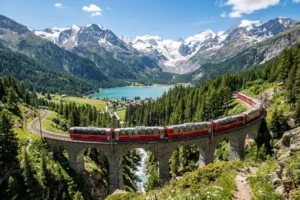
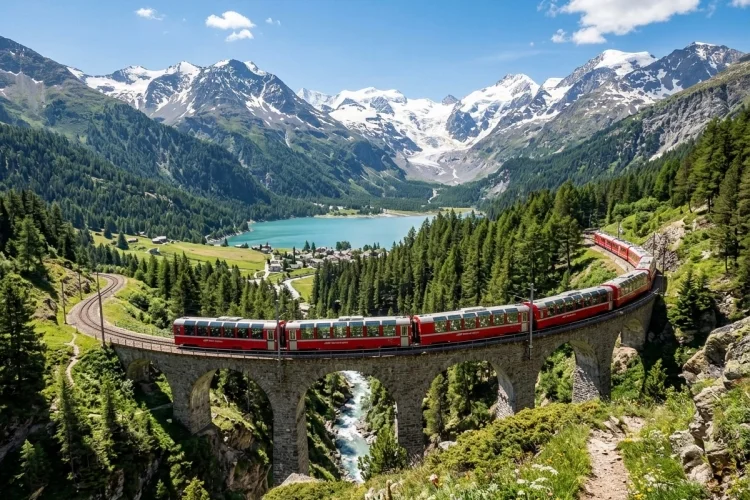
The Bernina Express connects the Swiss Alps with Tirano in northern Italy. Depending on the chosen service, travellers can begin in Chur or St Moritz before crossing high mountain landscapes, glacial valleys, lakes, bridges, and the famous circular viaduct at Brusio.
What makes this journey special is the dramatic change in scenery. The route moves from cool Alpine surroundings to the warmer Italian-speaking Poschiavo Valley, eventually descending towards palm trees and Mediterranean influences near Tirano.
The branded Bernina Express uses panoramic carriages and requires a valid ticket plus a seat reservation. Services vary by season, so checking the official timetable before arranging hotels or onward connections is essential.
Turn It into a Longer Italian Journey
Spend a night in Tirano, or continue towards Lake Como or Milan. Travellers who prefer flexibility can also investigate regional trains using the Bernina railway line, although journey times, changes, and reservation arrangements differ from the panoramic service.
The route is beautiful throughout the year. Summer brings green valleys and clearer hiking conditions, while winter transforms the higher sections into a snowy landscape.
2. Glacier Express, Switzerland
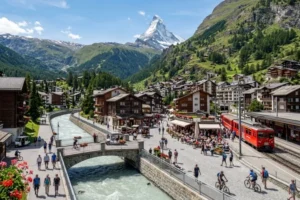
The Glacier Express travels between Zermatt and St Moritz, linking two of Switzerland’s best-known mountain resorts. Despite its name, it is not designed for speed. The complete panoramic journey takes about eight hours.
Along the way, the train crosses 291 bridges and passes through 91 tunnels. Highlights include the Rhine Gorge, the Oberalp Pass, Alpine villages, deep valleys, and mountain scenery near the Matterhorn region and the Engadin.
This route works best when the journey itself is your main activity for the day. Bring a book or headphones, but you may barely use them because the landscape keeps changing.
A seat reservation is mandatory in addition to a valid ticket. Reservations are released according to the operator’s booking windows, and the most desirable dates can fill quickly during summer and holiday periods.
3. The Bergen and Flåm Railways, Norway
Norway offers two rail journeys that fit together naturally. The Bergen Railway travels between Oslo and Bergen, crossing countryside, mountain terrain, lakes, and the vast Hardangervidda plateau.
At Myrdal, passengers can connect with the Flåm Railway for a steep descent towards the village of Flåm. The line runs through 20 tunnels and passes mountainsides, waterfalls, farms, and the narrow Flåm Valley.
Around 80% of the route has a gradient of 5.5%, making it one of the steepest standard-gauge railway lines in the world.
Combine Rail Travel with a Fjord Cruise
Flåm sits beside the Aurlandsfjord, making it easy to combine the railway with a boat journey. A popular itinerary travels from Oslo to Myrdal, descends to Flåm, continues by ferry through the fjord region, and eventually finishes in Bergen.
The Flåm Railway operates throughout the year, but the atmosphere changes significantly by season. Summer provides green landscapes and powerful waterfalls, while winter offers snow-covered mountains and a quieter experience.
Allow more than one day when combining both lines. Trying to squeeze the Bergen Railway, Flåm Railway, and a fjord cruise into a tight schedule leaves little room for delays or time beside the water.
4. West Highland Line, Scotland
The West Highland Line leaves Glasgow and travels through increasingly wild landscapes towards Oban, Fort William, or Mallaig. The route passes lochs, open moorland, forests, remote stations, mountain scenery, and stretches of Scotland’s rugged west coast.
The section towards Mallaig includes the Glenfinnan Viaduct, which became internationally recognisable through the Harry Potter films.
However, the wider route is much more than a film location. Rannoch Moor, Loch Treig, Fort William, and the coastal approach to Mallaig make the entire journey rewarding.
Regular ScotRail services offer an affordable way to experience the route. A separate seasonal heritage steam service also uses part of the line, but it requires its own ticket and should not be confused with the ordinary scheduled train.
Stay in Fort William for hiking and mountain activities, or continue to Mallaig for ferry connections to the Isle of Skye and the Small Isles.
5. Semmering Railway, Austria
Austria’s Semmering Railway proves that a scenic train journey does not have to take an entire day. The historic mountain section lies between Gloggnitz and Mürzzuschlag and forms part of the main rail route south from Vienna.
Built between 1848 and 1854, the 41-kilometre railway crosses a mountainous area using tunnels, stone viaducts, bridges, and carefully engineered curves. It remains in use and is protected as a UNESCO World Heritage Site because of its importance in early railway engineering.
You can experience the line while travelling from Vienna towards Graz, although stopping in Semmering allows time for walks and viewpoints overlooking the railway.
Autumn is particularly attractive when the surrounding forests change colour. Winter adds snowy scenery, while spring and summer are better for hiking along trails near the historic viaducts.
6. The Douro Line, Portugal
The Douro Line follows one of Portugal’s most beautiful river landscapes. Current regular services connect Porto with Pocinho, covering more than 170 kilometres and following the river through increasingly rural wine country.
After leaving the urban area around Porto, the most scenic sections begin farther inland. The train passes steep vineyard terraces, small riverside settlements, stone walls, bridges, and hills rising above the water.
Pinhão is a popular place to stop because it offers restaurants, wineries, boat trips, and an attractive railway station decorated with traditional tiles. Travelling farther to Pocinho provides a longer and quieter experience.
Sit on the river-facing side when possible, although the Douro changes sides relative to the railway during the journey. Start early if you plan to return to Porto on the same day, and check the final departure before wandering away from the station.
A historic tourist train also operates on selected seasonal dates between Régua and Tua. It is separate from the ordinary regional service and normally requires advance booking.
How to Plan a Scenic European Rail Trip
Do not assume that every scenic service works like a normal commuter train. Panoramic trains such as the Glacier Express require reservations, while ordinary regional routes may allow greater freedom. Always confirm whether your booking includes both the fare and the seat.
Leave a buffer before an important connection. Scenic trains often travel through mountain areas where weather, engineering work, or operational issues can affect the timetable.
Pack lightly enough to manage stairs, platforms, and luggage racks. Keep water, snacks, a portable charger, and a light layer close to your seat rather than buried inside a large suitcase.
Photography through panoramic windows can be difficult because of reflections. Wear dark clothing, move the camera close to the glass, and avoid blocking the view for other passengers.
Most importantly, do not plan to work throughout the ride. Put away the laptop occasionally, watch the landscape change, and let the journey become part of the holiday.
Europe’s Most Scenic Train Journeys show how rewarding slow travel can be. The Bernina and Glacier Express routes cross extraordinary Swiss landscapes, while Norway’s Bergen and Flåm railways combine mountains with fjord scenery.
Scotland’s West Highland Line offers moors and remote coastal views, Austria’s Semmering Railway blends engineering with history, and Portugal’s Douro Line follows vineyard-covered hills beside the river.
Choose a route that fits naturally into your wider itinerary rather than travelling several hours simply to tick it off a list. Check seasonal timetables, reserve panoramic services early, and allow space for overnight stops along the way.
Pick one journey from this guide and start building your next European rail adventure around the view outside the window.