A European beach holiday can be as simple as dropping a towel beside the sea, but choosing the right coastline makes a huge difference. Some travellers want powdery sand and shallow water.
Others would happily trade beach clubs for limestone cliffs, hiking trails, snorkelling, and a quiet cove with barely any facilities.
The best Mediterranean beaches offer all of those experiences. Across Greece, Spain, Italy, Croatia, Cyprus, and Malta, you will find pink-tinged sand, pine-backed bays, dramatic rock formations, and remarkably clear water.
However, the most photogenic beach is not automatically the best match for every trip. Access, crowds, wind, facilities, and nearby accommodation matter just as much as the view.
This guide highlights six standout beaches for a European summer holiday and explains what each one does best. Whether you are organising a family escape, an active coastal adventure, or several lazy days beside turquoise water, these destinations provide a strong starting point.
1. Elafonissi, Crete: Best for Shallow Water and Dreamy Colour
Elafonissi sits roughly 80 kilometres southwest of Chania and is formed around a long peninsula connected to Crete by shallow water. It is famous for clear, lagoon-like sections and pale sand that can show soft pink tones where crushed shells and natural material gather.
The shallow areas make it appealing to families and relaxed swimmers, although its fame means summer days can become busy. Arrive early, walk beyond the closest organised section, and avoid expecting the beach to look empty at midday.
Elafonissi works best as part of a western Crete itinerary. Stay near Chania, Kissamos, or the southwest coast rather than spending most of your day driving there and back.
2. Cala Macarella, Menorca: Best for a Classic Turquoise Cove
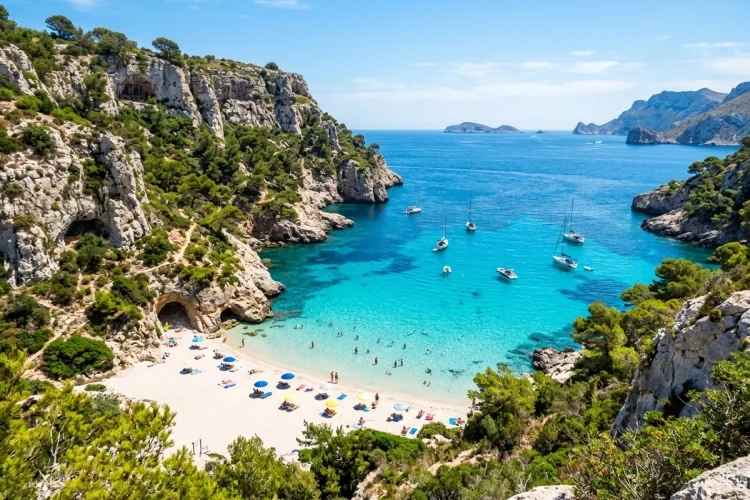
Cala Macarella looks exactly like the Mediterranean beach people imagine during winter. White sand meets vivid blue-green water, while limestone edges and pine-covered slopes wrap around the bay.
It belongs to a protected natural area on Menorca’s southern coast, and neighbouring Macarelleta can be reached on foot. Macarelleta is smaller, more secluded, and does not provide the same level of beach services.
The sheltered setting is excellent for swimming, kayaking, and paddleboarding. However, the cove is small enough to feel crowded quickly, so an early start is worth the alarm.
Do not arrive with a rigid access plan copied from an old travel blog. Seasonal road, parking, bus, and boat arrangements may change, so check current local transport information before travelling.
3. Cala Goloritzé, Sardinia: Best for Hikers and Wild Scenery
Cala Goloritzé is not the easiest beach on this list, and that is part of its appeal. The Sardinian cove is framed by pale rock, intensely blue water, and a 143-metre limestone pinnacle that rises dramatically above the shore.
It remains completely wild, with none of the resort-style facilities found at more accessible Italian beaches. The coastline, white stones, and unusual rock formations give it an atmosphere that feels far removed from a standard beach resort.
Reaching Cala Goloritzé overland requires a proper hike, followed by the climb back out in the heat. Carry enough water, wear supportive shoes, and do not treat the route like a casual stroll in flip-flops.
Access to the path and beach must be reserved through the system linked by Baunei’s official tourism service. Check the latest rules before visiting because capacity controls and procedures are intended to protect the fragile environment.
4. Zlatni Rat, Brač: Best for Water Sports and Easy Facilities
Zlatni Rat stretches into the Adriatic near Bol on the Croatian island of Brač. Its distinctive pebbled point changes subtly with currents, waves, and wind, giving the beach its instantly recognisable shape.
The shore is about two kilometres from central Bol and can be reached using a paved path or a small passenger boat. This makes it considerably easier to visit than remote Mediterranean coves requiring long hikes.
Zlatni Rat is a strong choice when you want dramatic scenery without giving up convenient facilities. The area suits swimming, wind-powered water sports, and travellers who prefer having cafés, rentals, and accommodation nearby.
Wind and sea conditions can differ between the two sides of the point. Walk around before choosing your spot, and bring water shoes when you are more comfortable on soft sand than smooth pebbles.
5. Nissi Beach, Cyprus: Best for Lively Summer Energy
Nissi Beach near Agia Napa is the social option. The 600-metre beach has fine golden sand, a sheltered natural bay, shallow water, and a small offshore island that can sometimes be approached through the shallows.
Facilities include sunbeds, umbrellas, water sports, food options, changing areas, and organised entertainment. It offers an easy all-day beach experience without requiring visitors to carry every meal and piece of equipment themselves.
This makes Nissi convenient for groups, younger couples, and anyone who wants a beach day with music and activity. It is less suitable when your ideal afternoon involves complete silence and an empty horizon.
Go early for calmer swimming, then stay later when you want a livelier atmosphere. Travellers seeking something quieter can also explore nearby bays around Agia Napa rather than remaining in the busiest section all day.
6. Għajn Tuffieħa, Malta: Best for a Scenic Sunset Escape
Għajn Tuffieħa offers a more natural-feeling alternative to Malta’s heavily developed resort beaches. The bay sits beneath rugged slopes on the island’s northwest side and rewards visitors with a sandy shore, clear Mediterranean water, and broad coastal views.
VisitMalta features Għajn Tuffieħa among the Maltese Islands’ notable swimming destinations, alongside the country’s sandy, rocky, and pebbled coastal spots.
The descent helps separate the bay from the road and surrounding development, but remember that every downhill step becomes an uphill one after a hot day. Pack lightly and keep enough drinking water for the return.
Its western position makes late afternoon particularly attractive. Swim when the sun feels less intense, enjoy the warm evening light, and leave yourself enough visibility to climb back comfortably.
How to Plan Your Mediterranean Beach Holiday
Start with the experience you want, not the most famous photograph. Families may prefer the shallow water at Elafonissi or Nissi Beach. Active travellers will appreciate Cala Goloritzé, while couples seeking a classic island cove may lean towards Cala Macarella or Għajn Tuffieħa.
June and September often provide a comfortable balance between warm swimming weather and peak-season pressure. July and August offer maximum summer energy, but popular coves can fill early and accommodation generally requires more advance planning.
Always check wind, sea conditions, access rules, parking, and local transport shortly before leaving. Remote coves may have few toilets, cafés, or shaded areas, while organised beaches can charge separately for loungers and umbrellas.
Carry out every piece of rubbish and never remove sand, shells, stones, or plants. These beaches remain beautiful only when visitors treat them as protected natural places rather than disposable holiday backdrops.
The best Mediterranean beaches for a European summer holiday are wonderfully varied. Elafonissi offers shallow, colourful water, Cala Macarella delivers postcard scenery, and Cala Goloritzé rewards adventurous hikers.
Zlatni Rat combines a distinctive landscape with easy amenities, Nissi Beach brings energetic resort life, and Għajn Tuffieħa creates a more relaxed Maltese escape. Choose according to your travel style, mobility, and tolerance for crowds rather than chasing a single “number one” beach.
Check current access information, book protected locations when required, and leave room to explore nearby coves. Pick the coastline that sounds most like your ideal summer day, then start building your island or coastal itinerary around it.